Great West Way 16 days
Bristol to London
Itinerary
16 walking days
17 nights accommodation
Walking distance 178 miles Average daily distance 11.1 miles Longest day 13.0 miles
The itinerary starts at the Floating Harbour in Bristol where ships would have once sailed to the Americas. You then follow the Kennet and Avon Canal to Reading, passing through the towns of Bath, Bradford on Avon, Devizes, Pewsey, Hungerford and Newbury. The canal works its way through the remote countryside of Wiltshire where your only company will be the plentiful wildlife and the occasional canal-side pub.
Reading is just over half way and we now pick up the Thames Path passing through Henley, Marlow, Maidenhead, Windsor and into the outskirts of London.
The journey into London is dramatic as you will pass a variety of famous landmarks: Runnymede, Hampton Court, Kew Gardens, Battersea Power Station and the dramatic riverside walk from Westminster to Tower Bridge, a fitting finish.
Rest days: Bath is a popular place for a rest day although it comes a little early (day 3) on the walk. Also, day 2 is quite short (7.9 miles) so you should have time to do some sightseeing on arrival. Devizes (day 4 and about a quarter of the way) is a good place to stop. From here you can access the neolithic monuments of Stone Henge or Avebury, as well as Lacock Abbey, a National Trust property and home to Fox Talbot, inventor of the photograhic negative. At Reading (day 10 and just over half way) you could easily take a train to Oxford for the day. Finally, Windsor (day 13 and about 3/4s of the way) is a great place to rest.
Day 0 Arrive in Bristol
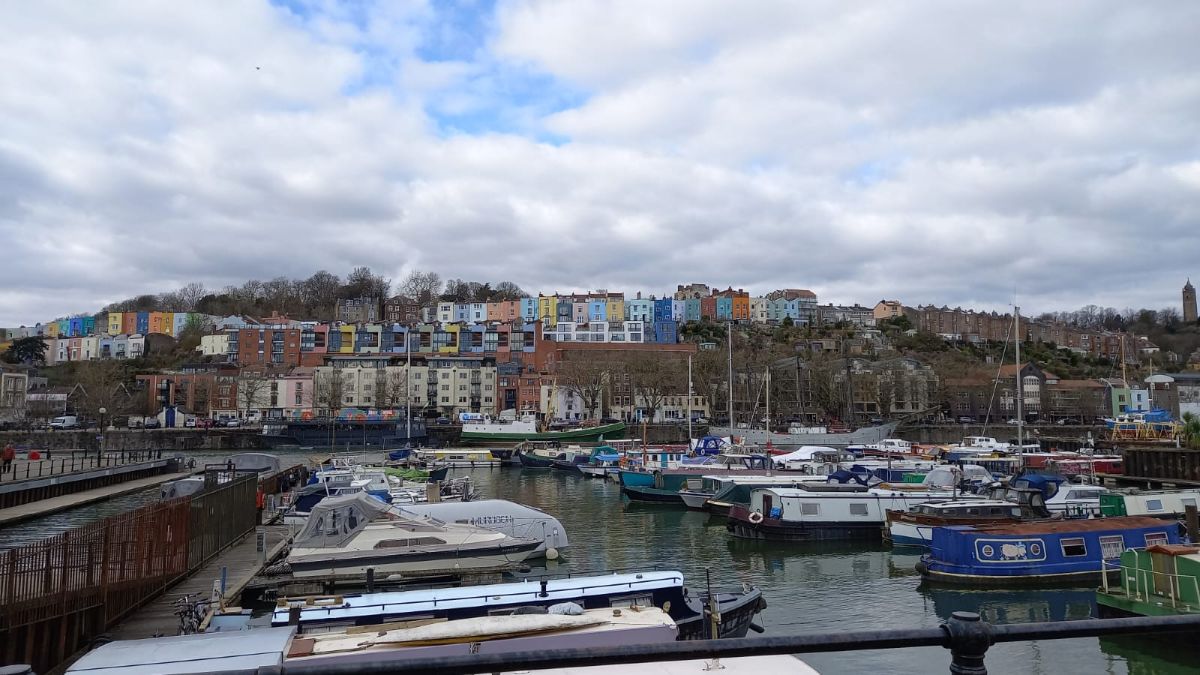
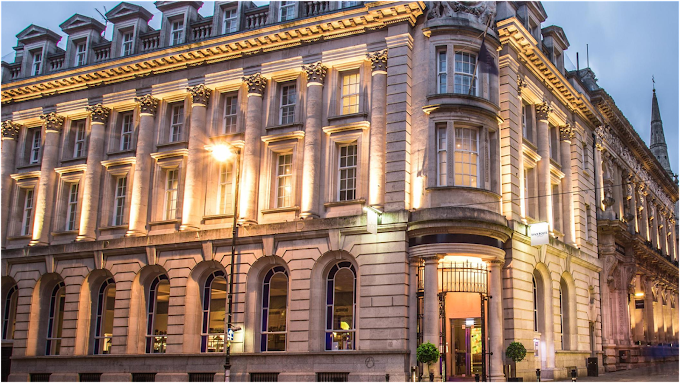
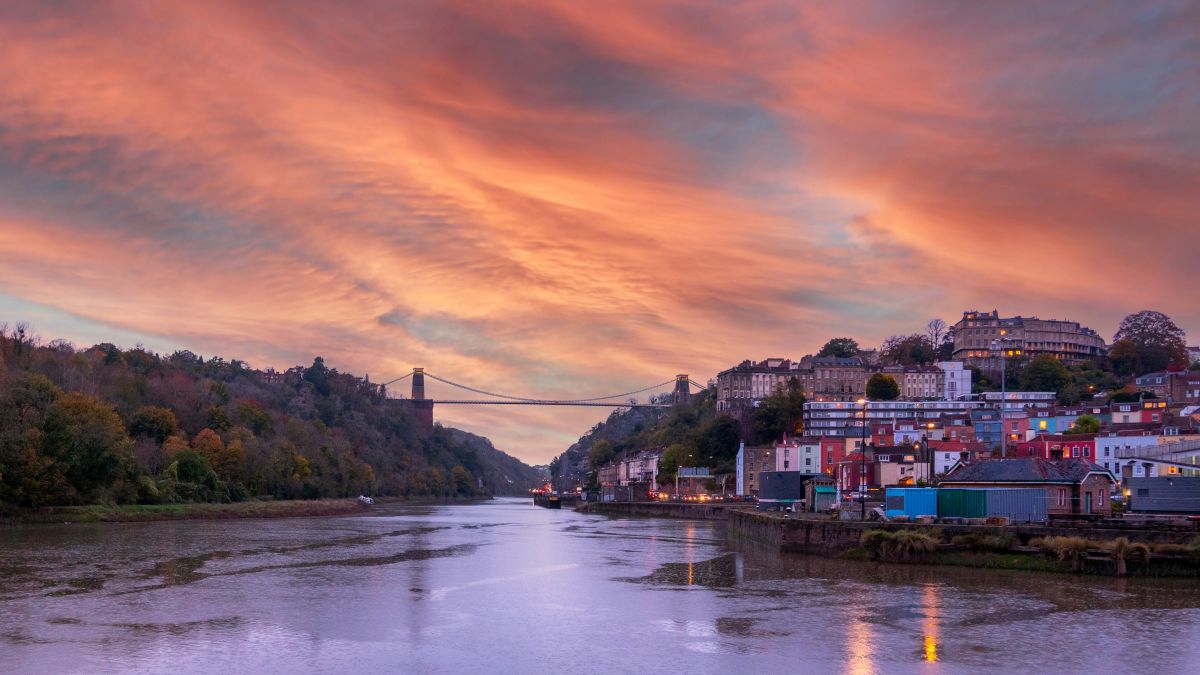
Welcome to Bristol, once a thriving port and now a trendy city. Its floating harbour, made from the River Avon, was the largest in the world. You will be staying at the Harbour Hotel, in the centre of the city. But, before you check in, you might want to walk downstream for a mile to Cumberland Basin from where the Clifton Suspension Bridge can be seen in the distance. Along the way you will pass Brunel’s SS Great Britain, at one time the largest passenger ship in the world.
Day 1 Bristol to Keynsham 10.3 miles
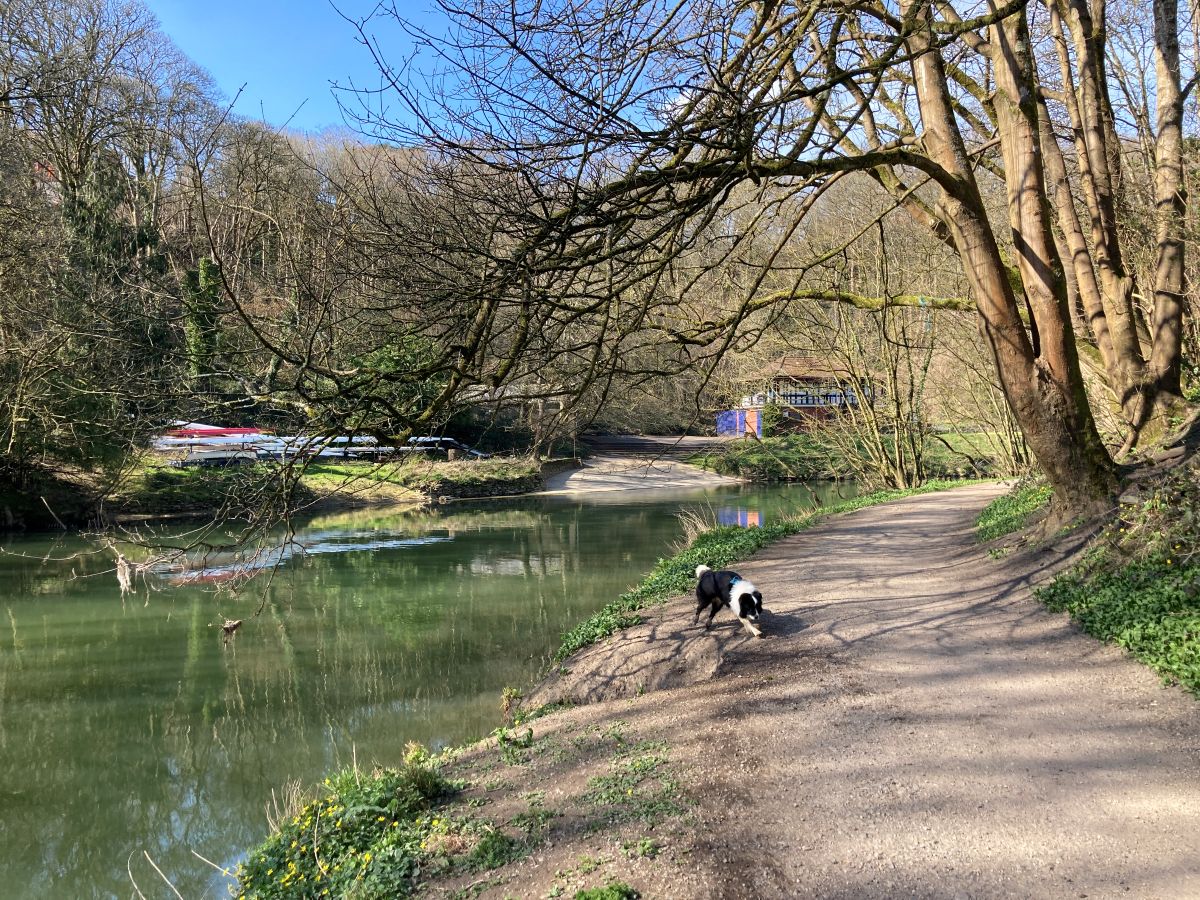
From the centre of Bristol you will follow the Feeder Canal and then on to the River Avon. Offices give way to industry which in turn changes to housing past Netham Lock.
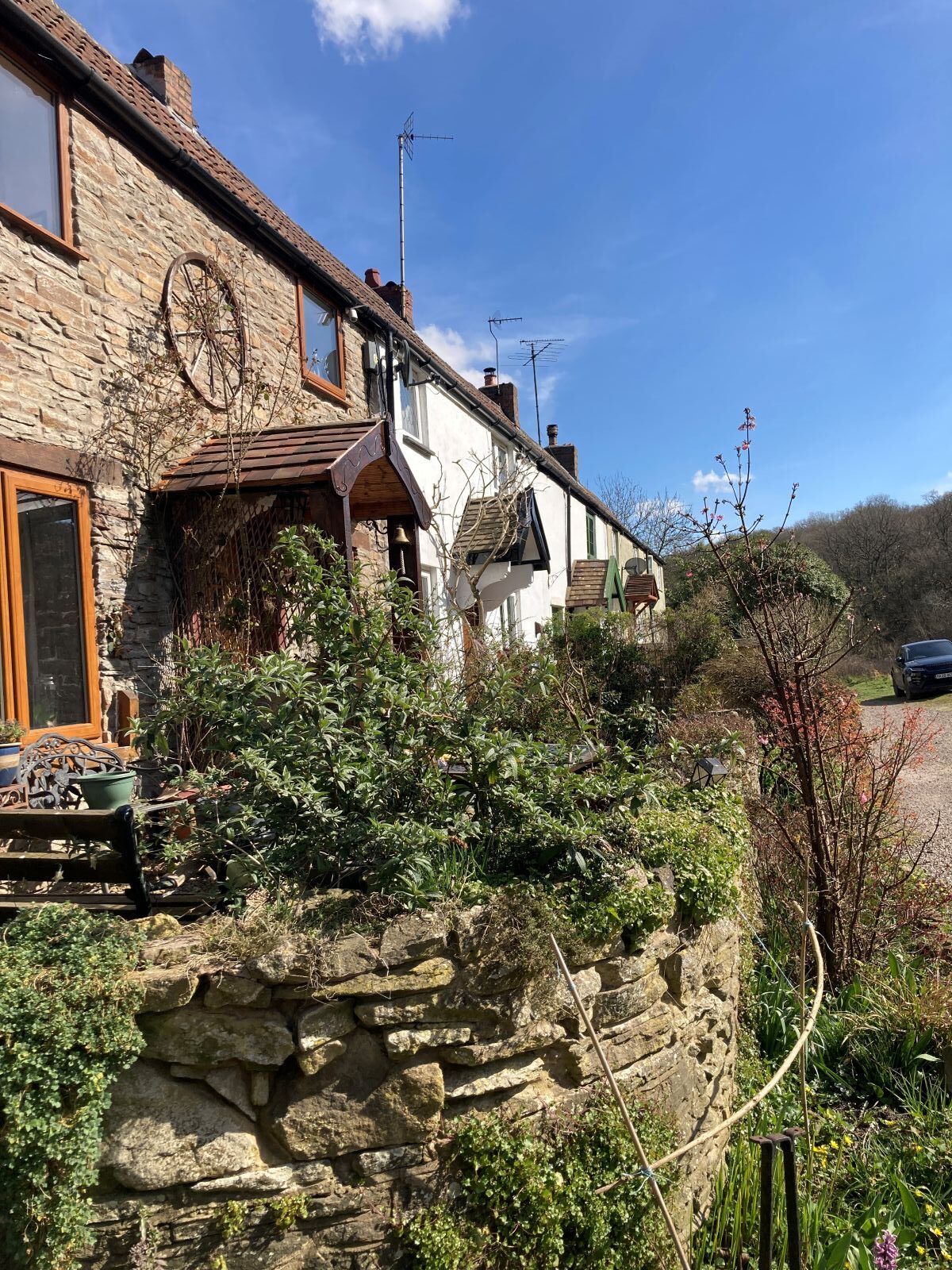
The river snakes its way through a narrow gorge with steep wooded hills on either side and the occasional row of riverside cottages. Lunch can be obtained at Beeses, a popular venue across the river for which a ferry service operates.
Soon you are at Hanham Lock with the chance of a mid-afternoon coffee at either of the two waterside pubs here.
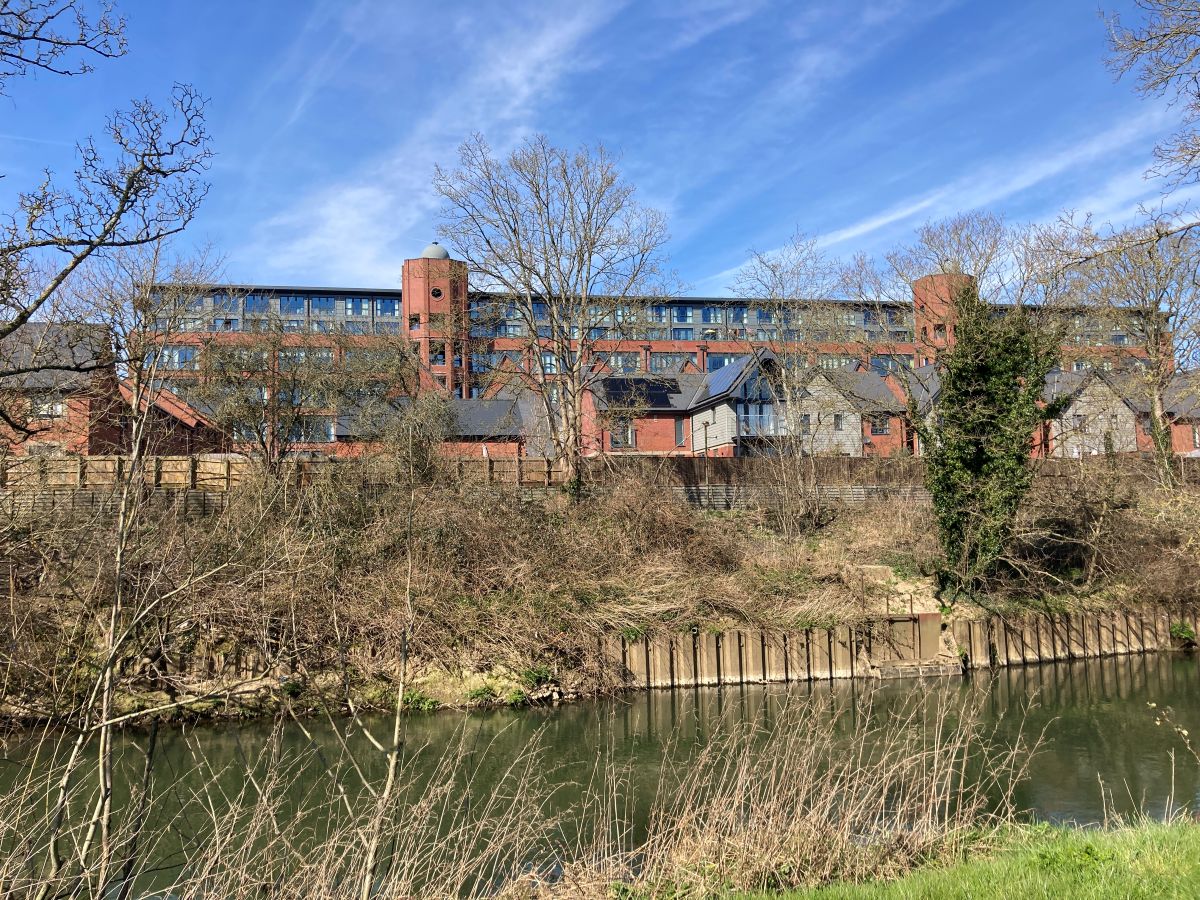
As you walk through fields you will see a giant building ahead of you. This was once the Elisabeth Fry chocolate factory, acquired by Cadbury and closed by Kraft. Elisabeth Fry was a quaker and philanthropist. Some of us still remember her cream chocolate which, we are told, still exists!
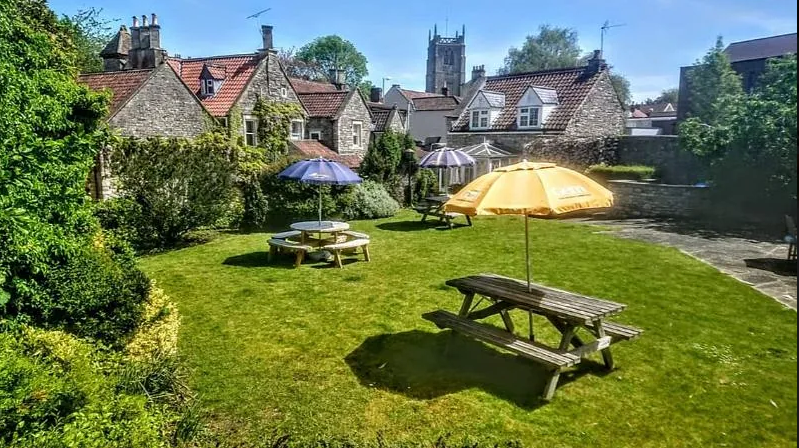
You have now arrived at Keynsham with a tricky end to the walk requiring a traverse of the lock gates. Here we’ve chosen the Old Manor House Hotel, believed to be the oldest building in Keynsham and serving guests since the 17th century through its 10 rooms
Day 2 Keynsham to Bath 7.9 miles
Today you leave the river for a while as you follow the Bristol and Bath Railway Path to Saltford, with its famous brass mill which mixes ingredients from Cornish ores and calamine from the Mendips.
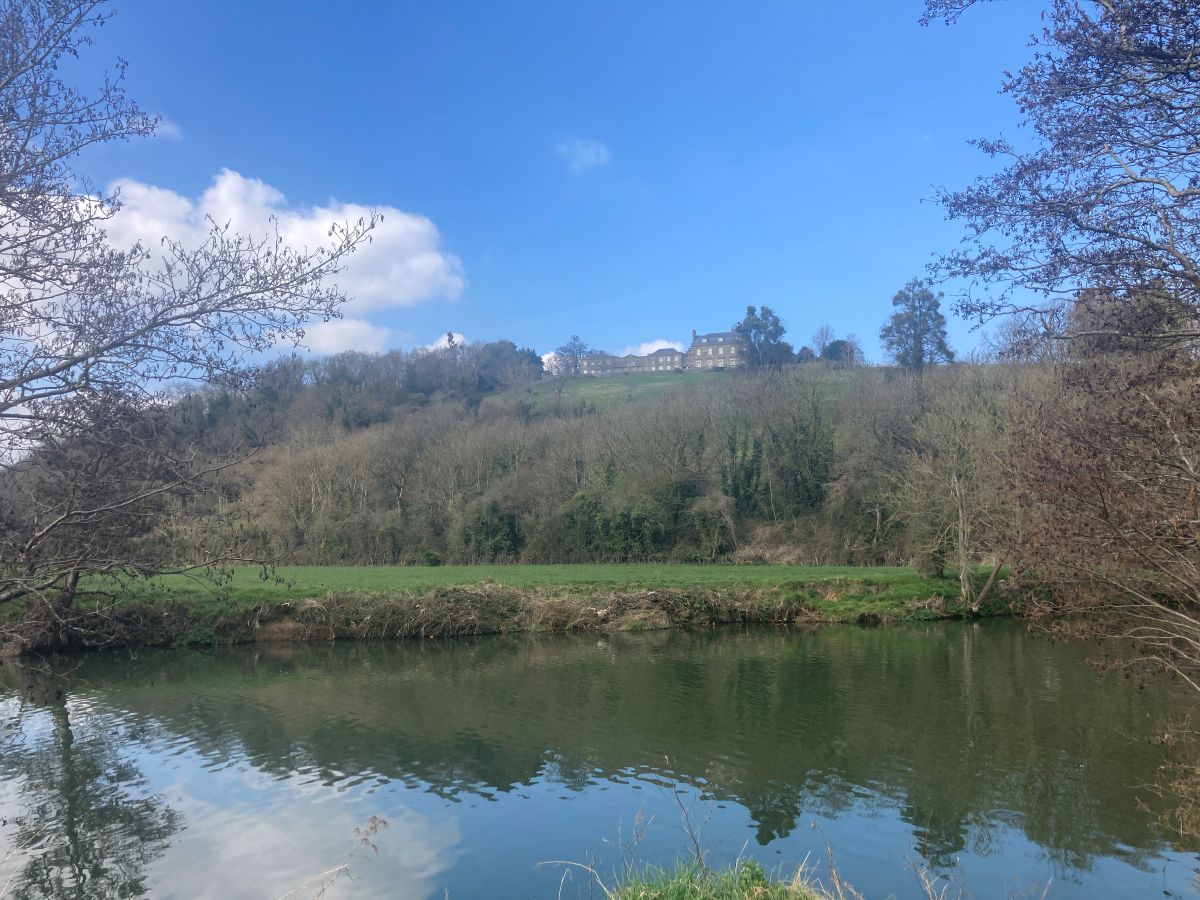
The walk continues along the river with tantalising views of the Bristol and Bath Railway Path where people seem to be travelling at a much faster pace than you. That’s because it’s a cycle path following a disused railway line. Don’t worry. You’ll get a taste in due course. Up on the hill to your left is Kelston Park, a magnificent 18th century Grade II-listed country house set in nearly 200 acres.
At Newbridge you’ll hopefully arrive in time for lunch at The Boathouse. Newbridge marks the approach into Bath.
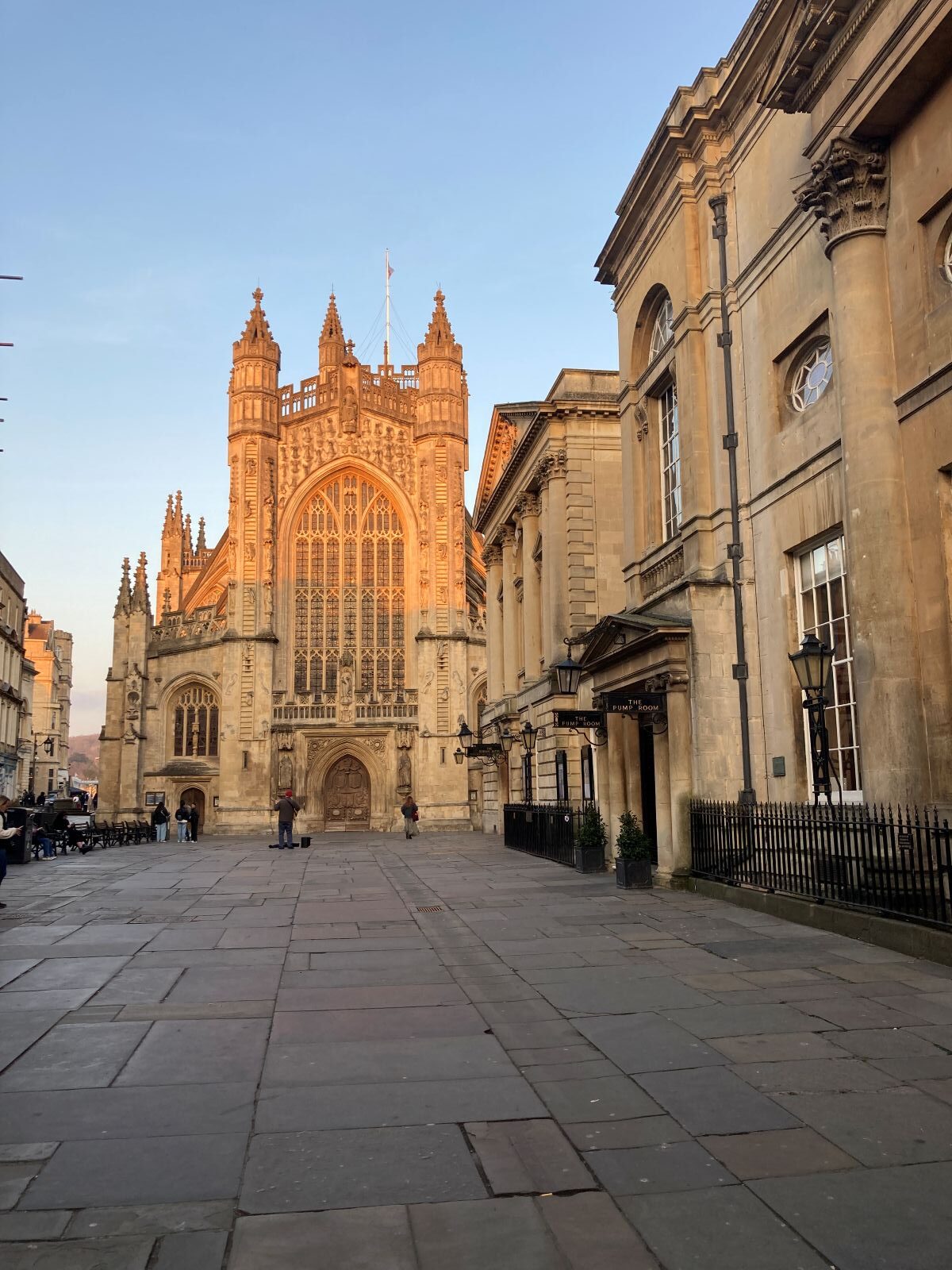
This famous city, a World Heritage Site, became a popular Roman town on account of its hot springs. It fell into neglect for many centuries but revived in the Georgian era when the springs once again became fashionable. The architecture of the city reflects that time with its spectacular crescents.
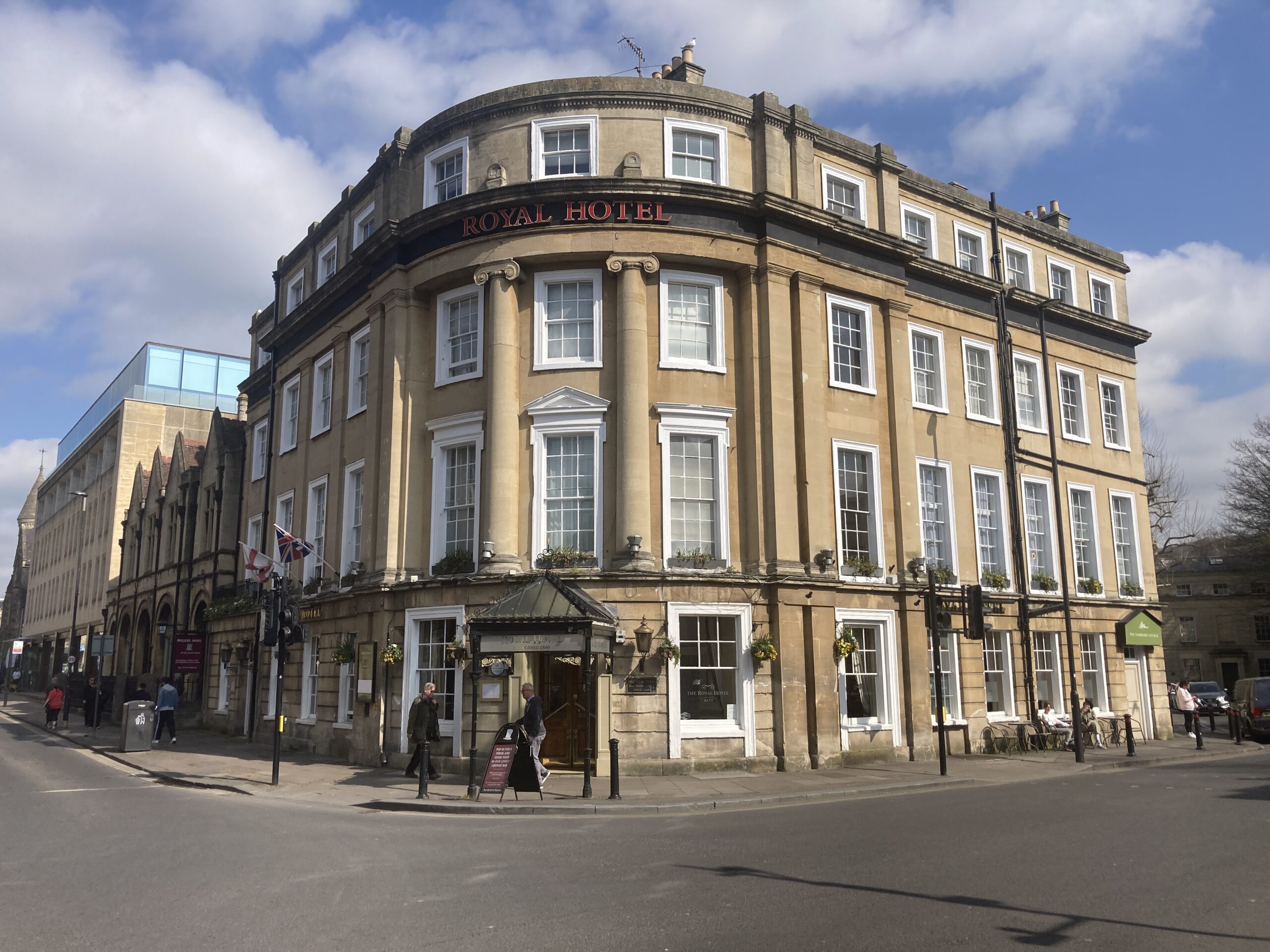
You will stay at the Royal Hotel, not far from the junction of the canal and the river, and handy for some sightseeing. There is plenty to see but would suggest you prioritise the Abbey, the Royal Crescent and the Roman Baths. Or perhaps a walking tour? Jane Austen lived here for a while. Why not visit the Jane Austen Centre?

Day 3 Bath to Bradford on Avon 9.7 miles
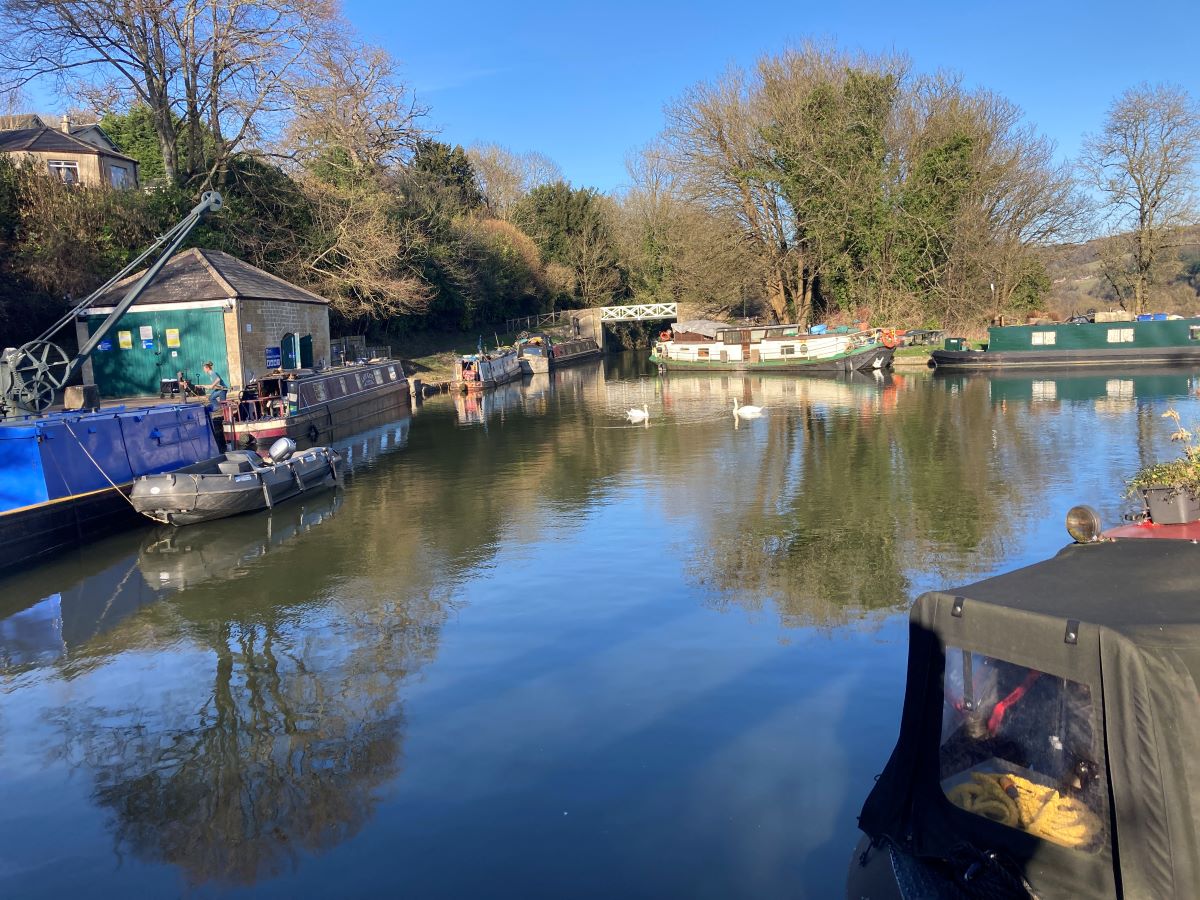
This is a walk filled with interest and loveliness. Up until now you’ve been following the navigable River Avon. At Bath the canal “proper” starts, heading up a cascade of locks, one of which is the deepest lock in England. The walk takes you high above the city with glorious views over the city.
Soon you will pass the Claverton Pumping Station, the first of three engineering feats by John Rennie. Here steam driven pumps take water from the River Avon 40 feet below.
Next is Dundas, the second of Rennie’s creations, where the canal dramatically crosses the river and the railway. It also marks the junction of the Somerset Canal, built, as the name suggests, to transport freshly-mined coal from north Somerset to the markets of Bath and Bristol. Only the first 500m remain open.
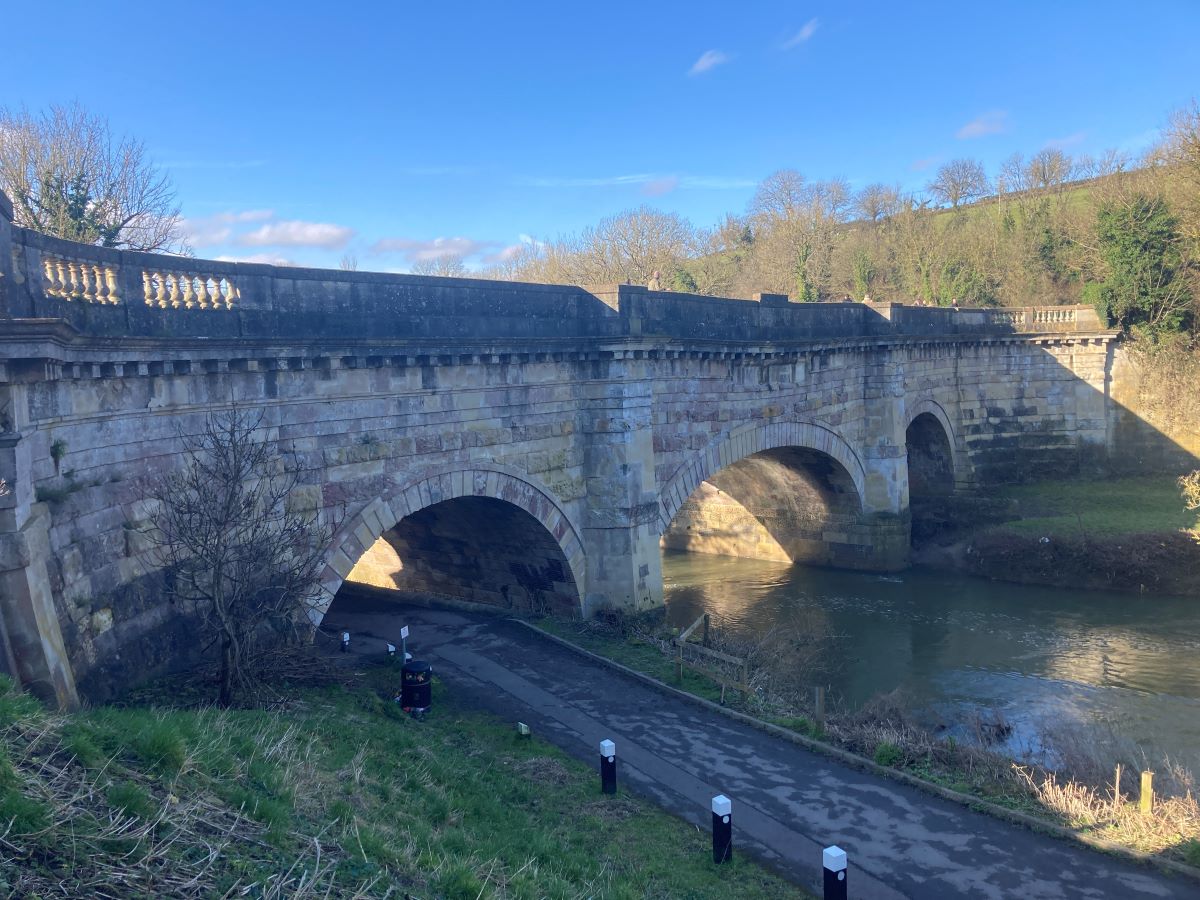
After a further three miles you meet the dramatic aqueduct of Avoncliff where the canal makes a sharp 90 degree turn to cross the river and the railway. No prizes for guessing who created this!
Throughout the walk you will have enjoyed the Cotswold scenery: the countryside feels softer with smaller enclosed fields, more woods, and lots of sheep. Pretty villages such as Freshford and Limpley Stoke, adorned with stone cottages, line the steep hillsides.
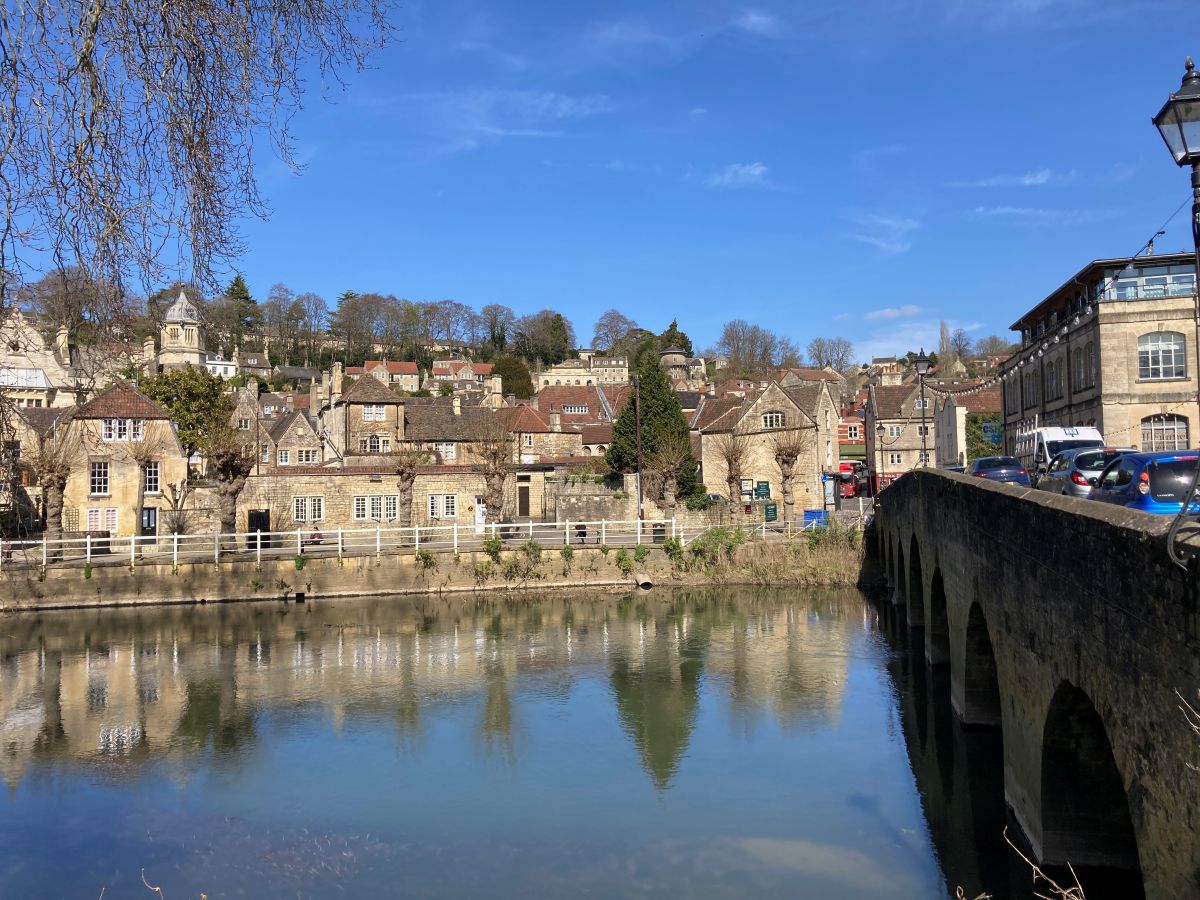
Bradford on Avon, originally Broad Ford, is a former mill town where textiles were produced using local wool powered by the Avon. Here, the railway, the canal and the river are uniquely juxta positioned providing dramatic landscapes. You will be staying at Timbrell’s Yard, a boutique hotel nestling on the banks of the Avon.

Day 4 Bradford on Avon to Devizes 13.0 miles
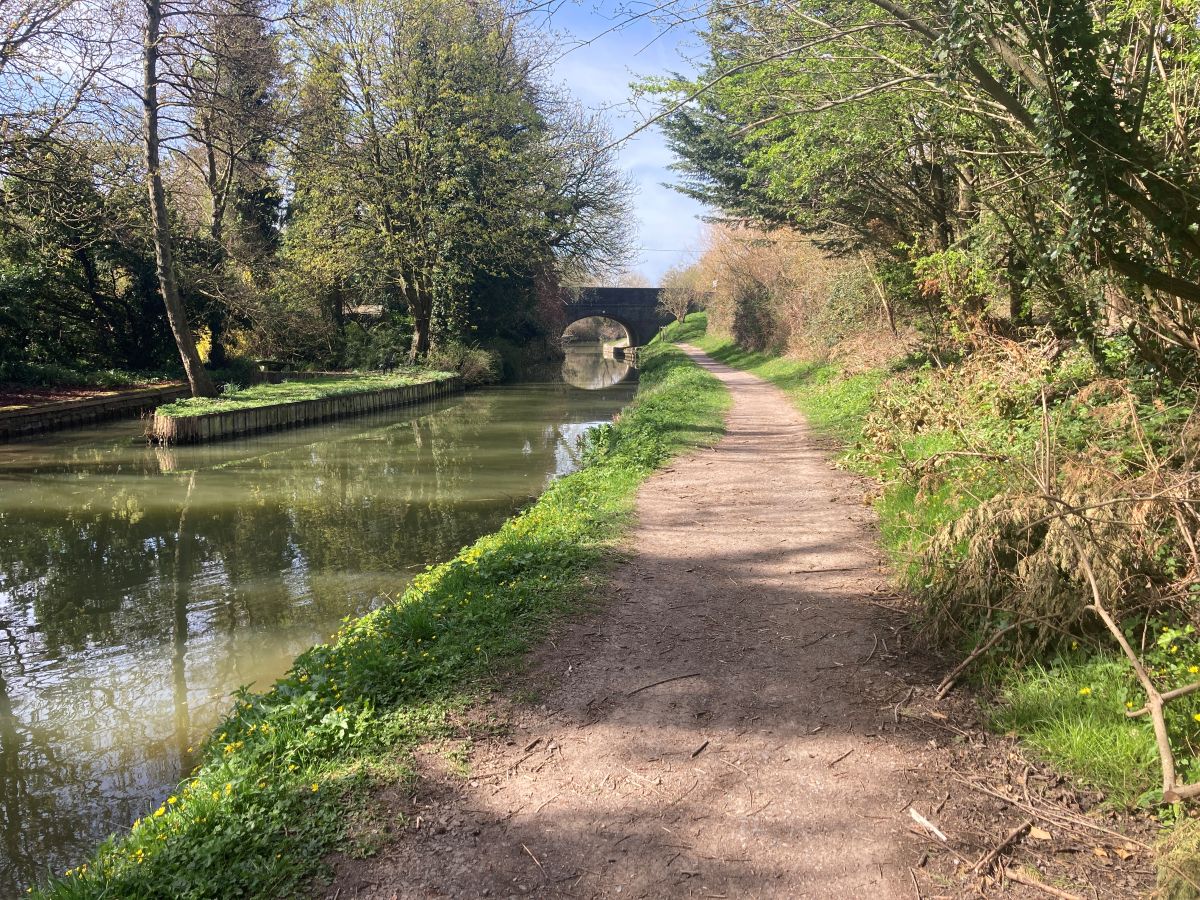
Today is a longish stretch with the most exciting moments being at the end. You are now well and truly on the canal with the River Avon out of sight to your north.
You will pass the start (or finish) of the redundant Wilts and Berks Canal at Semington, a 52 mile canal stretching to Abingdon on the Thames. The start (or finish) of the redundant Wilts and Berks Canal can be seen at Semington, a 52 mile canal stretching to Abingdon on the Thames.
The Barge Inn at Seend Cleeve might be a stop for lunch.
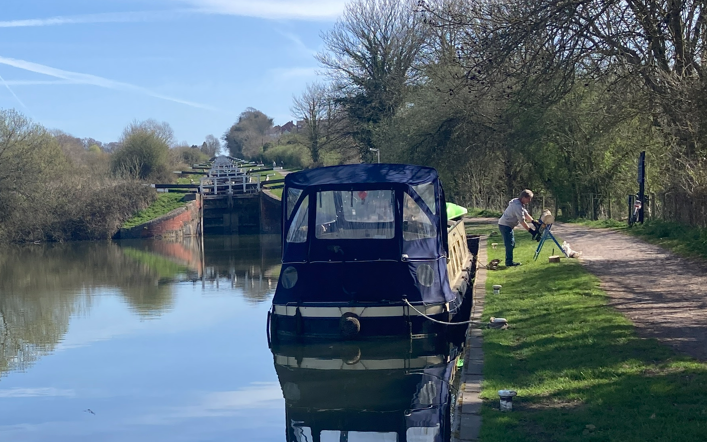
As you approach Devizes at the end of a long day you have a hill to climb! Caen Hill is a flight of 29 locks covering a drop of 237 feet. Take a moment to watch the boats coming through. Unaided it can take four hours to pass by; although, with the help of volunteers from the Canal & River Trust the time can be halved.
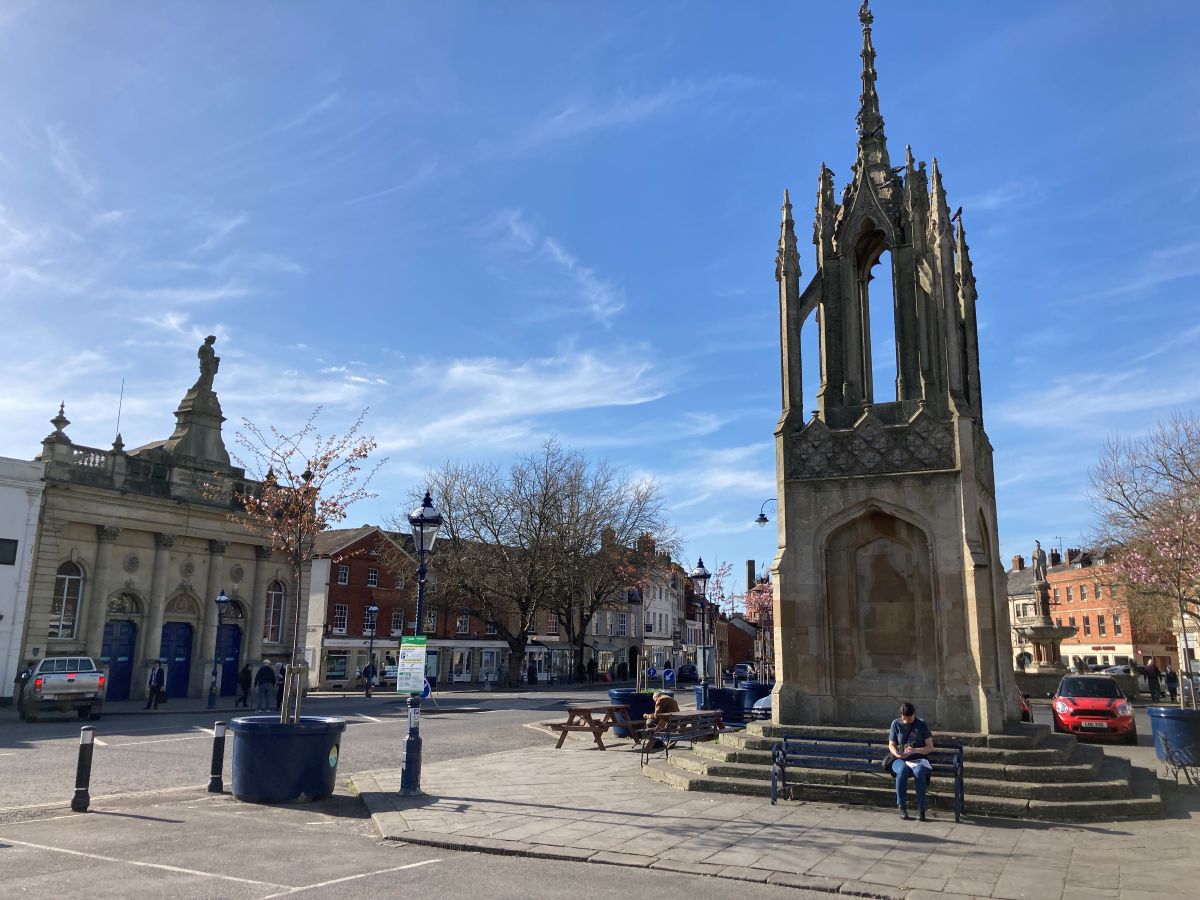
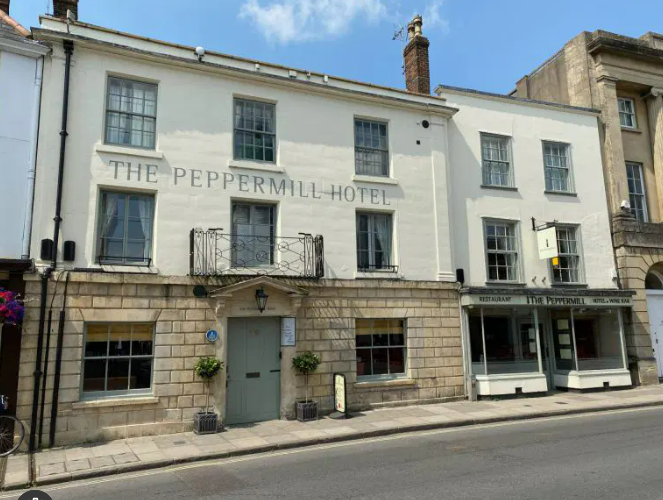
Devizes is soon reached, the first town since Hungerford. Its rather peculiar name derives from its castle’s Latin name, Castrum ad divisas, meaning the castle at the boundaries. The castle was since replaced. You will stay at the Peppermill, a boutique hotel close to the town square.
Day 5 Devizes to Pewsey 12.6 miles
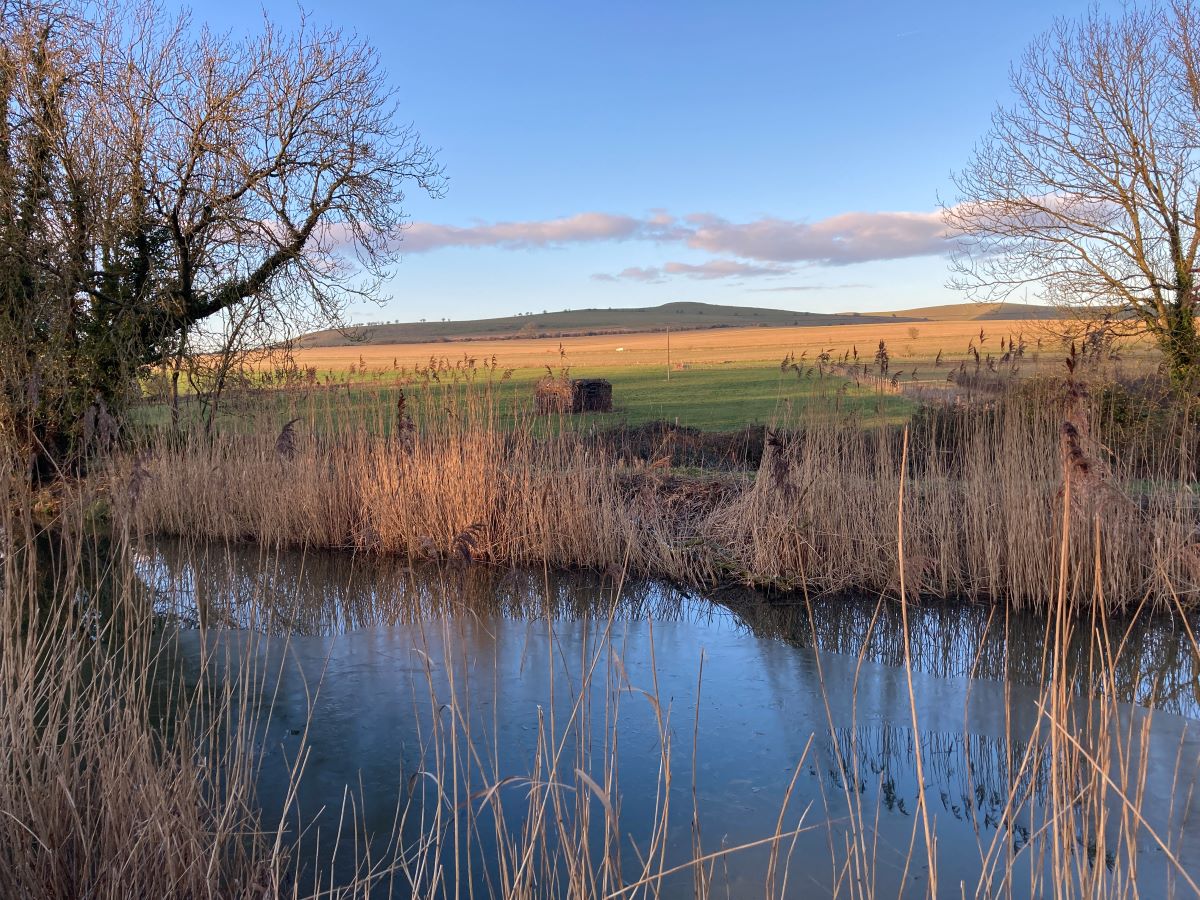
This is the most remote section of the canal as it winds its way through the open countryside of Wiltshire. It’s also, unusually, a day without locks. Between Devises and Wootton Rivers, which you will pass tomorrow, there are no locks – a “pound” stretching for 15 miles.
From Devizes to Honeystreet, the canal meanders around the village of Horton. It’s a lonely section, peppered with bridges, and your only company might be fishermen.
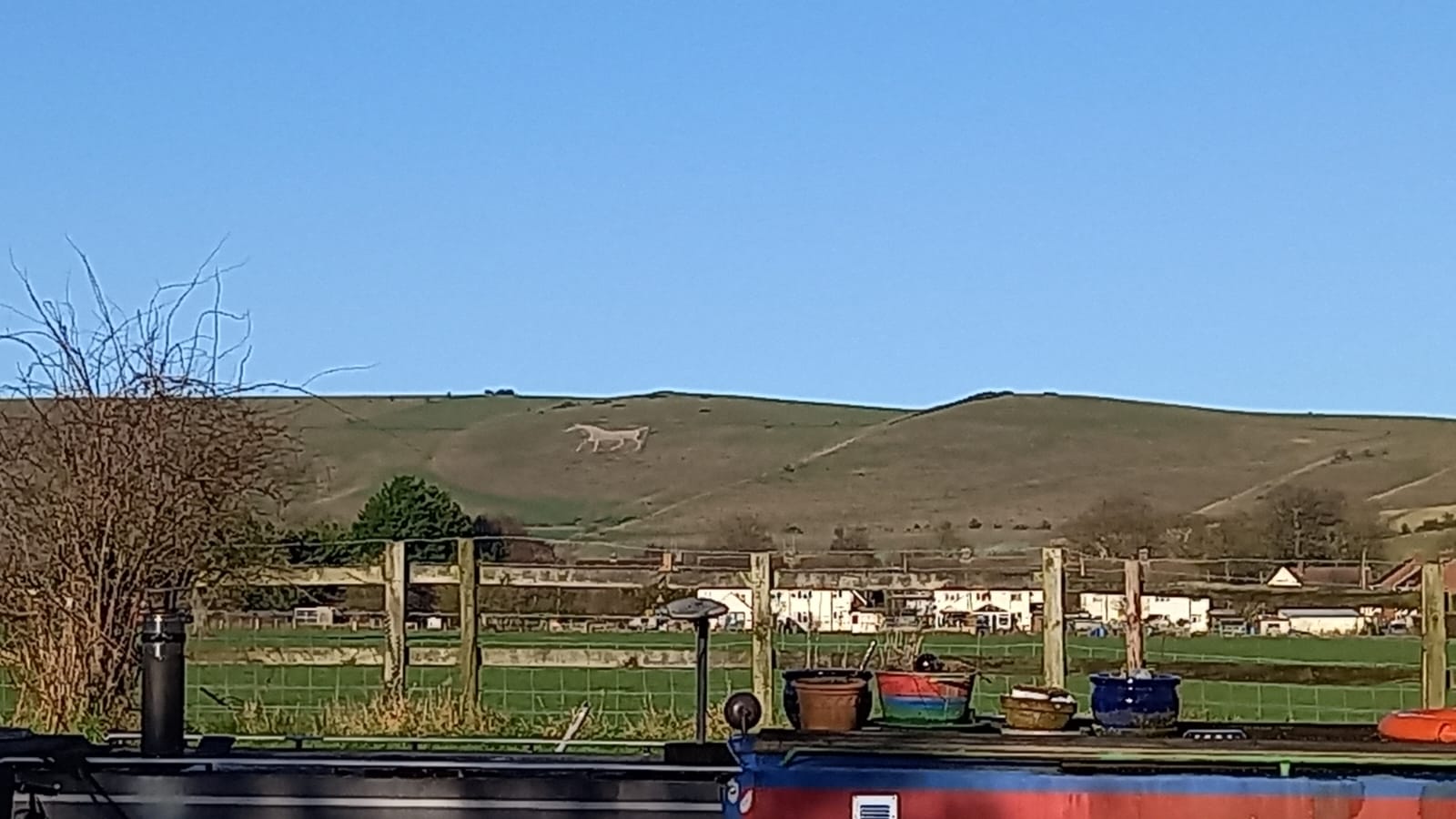
As you approach Honeystreet, a rambling collection of former industrial buildings comprising a saw mill and barge maker, you will see the White Horse of Alton Barnes on the hill to your left. The figure was cut into the chalk in 1812.
At Honeystreet, home to a fabulous café and also the Barge Inn, you will find the Crop Circle Vistors’ Centre. The fields of Wiltshire are world famous for this peculiar phenomenon. Here you can read about their different theories and also how they have affected farm life.
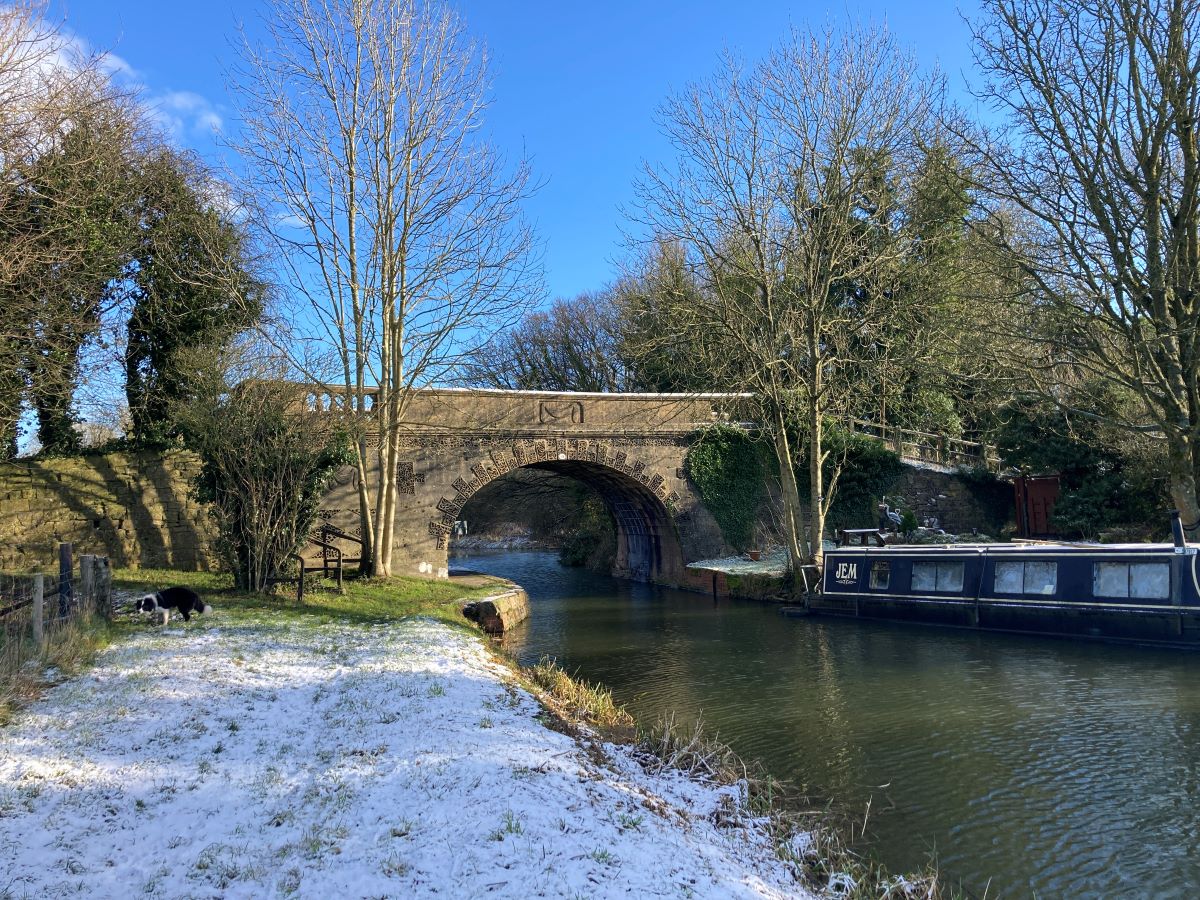
The canal contours the slopes of Picked Hill and Woodborough Hill, part of the Marlborough Downs. Ladies Bridge is the next highlight. This beautiful bridge is unlike the simple brick bridges as, when the canal was built, the landowner, Lady Susannah Wroughton, insisted on a bridge befitting a Lady.
And so to Pewsey, more village than town, where you are reunited with what is now an infant River Avon. Your accommodation will be in a bed and breakfast in the High Street.
Day 6 Pewsey to Froxfield 12.5 miles
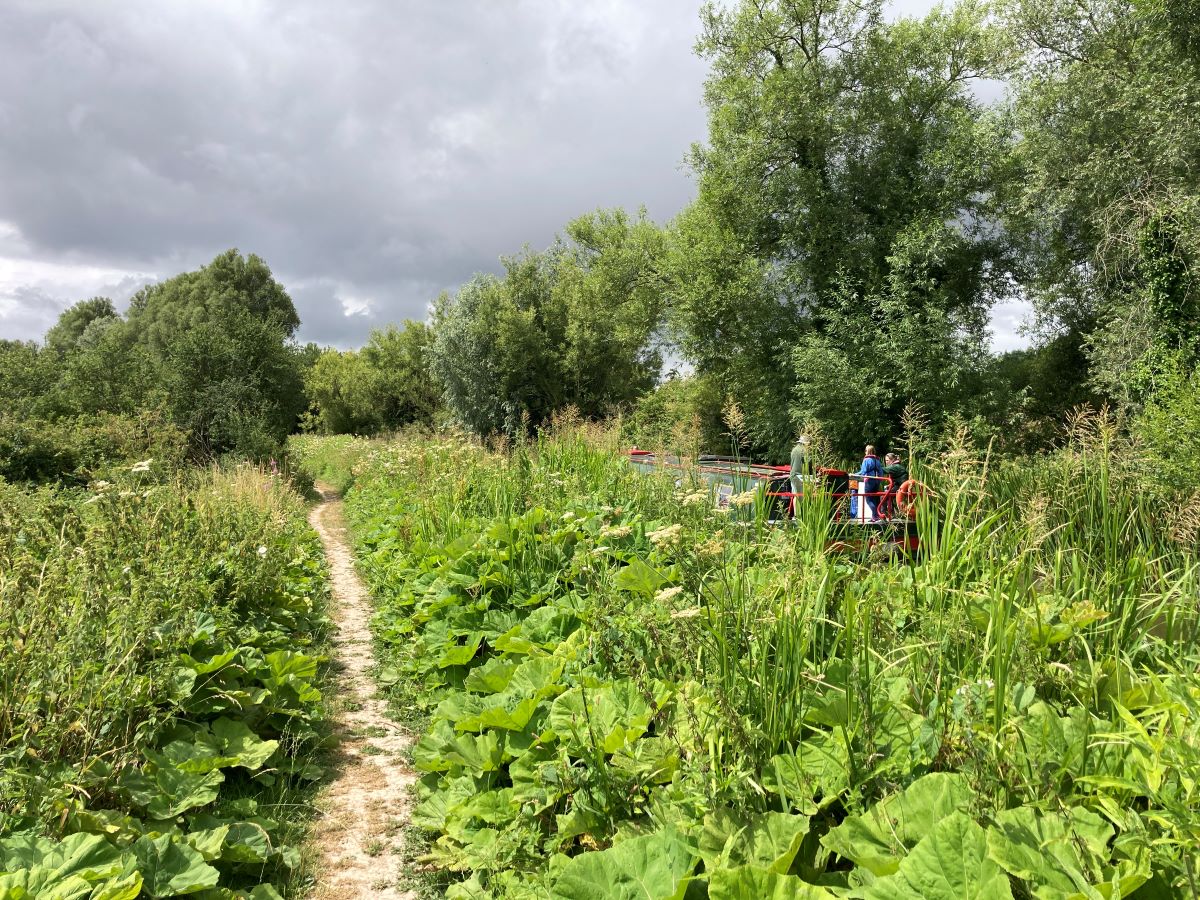
You regain the canal via a lovely footpath taking you past the infant Avon. Once on the canal you will pass Jones Mill Nature Reserve, wetlands filled in spring and summer with irises and orchids.
At Bruce Tunnel, the only tunnel on the canal, you will be separated from the canal for just a ¼ mile. The path is well marked. Since this marks the summit, it’s downhill all the way now!
Next up is Wolf Hall Bridge, named after nearby Wolf Hall, home of the Seymour family who briefly gave us a queen. Sadly, there’s nothing left of the hall.
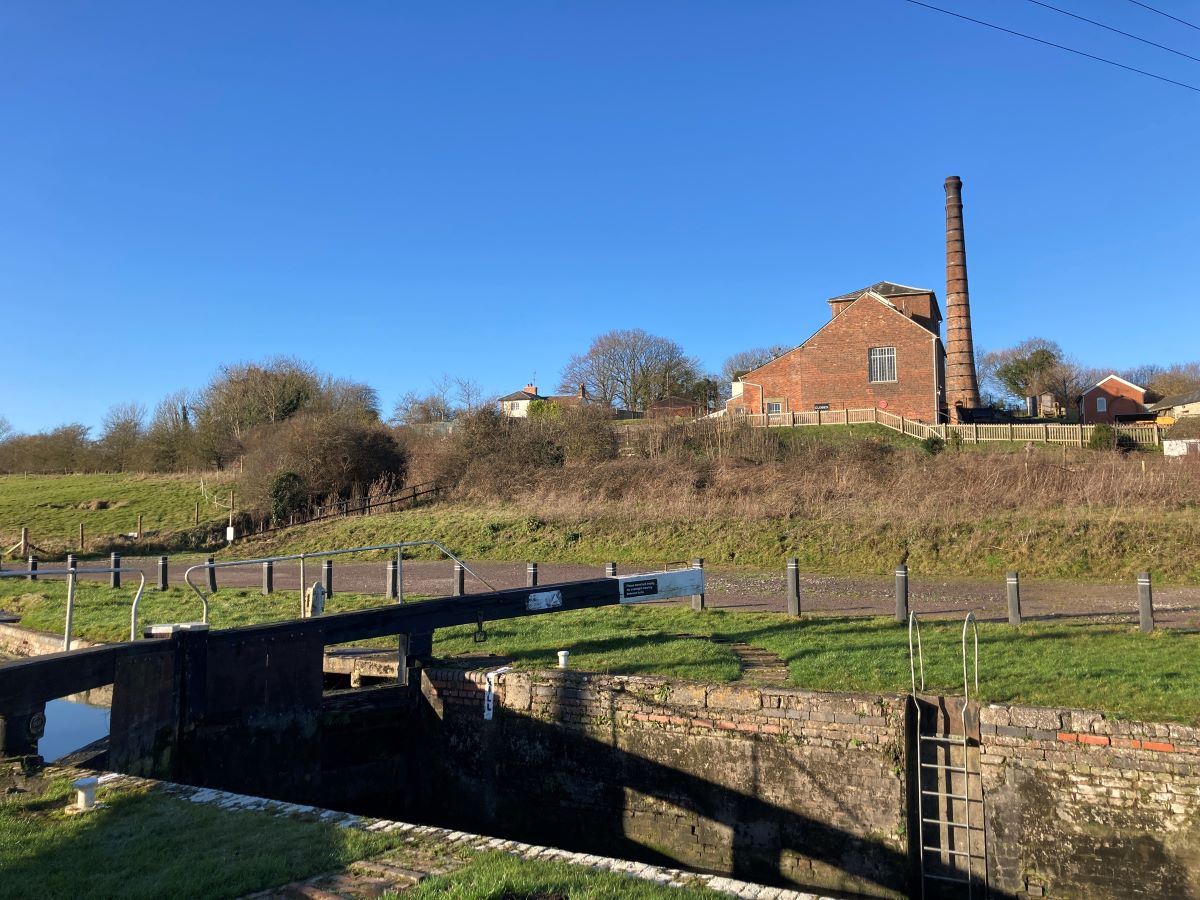
Just past the bridge is Crofton, where water is pumped out of nearby Wilton Water. The pump used to be operated by steam-driven beam engines which can still be visited.
You are soon in Great Bedwyn. Despite its name it’s quite small – although Little Bedwyn, further along, is smaller! The church is well worth visiting with a chancel dedicated to John Seymour, father of Jane Seymour.
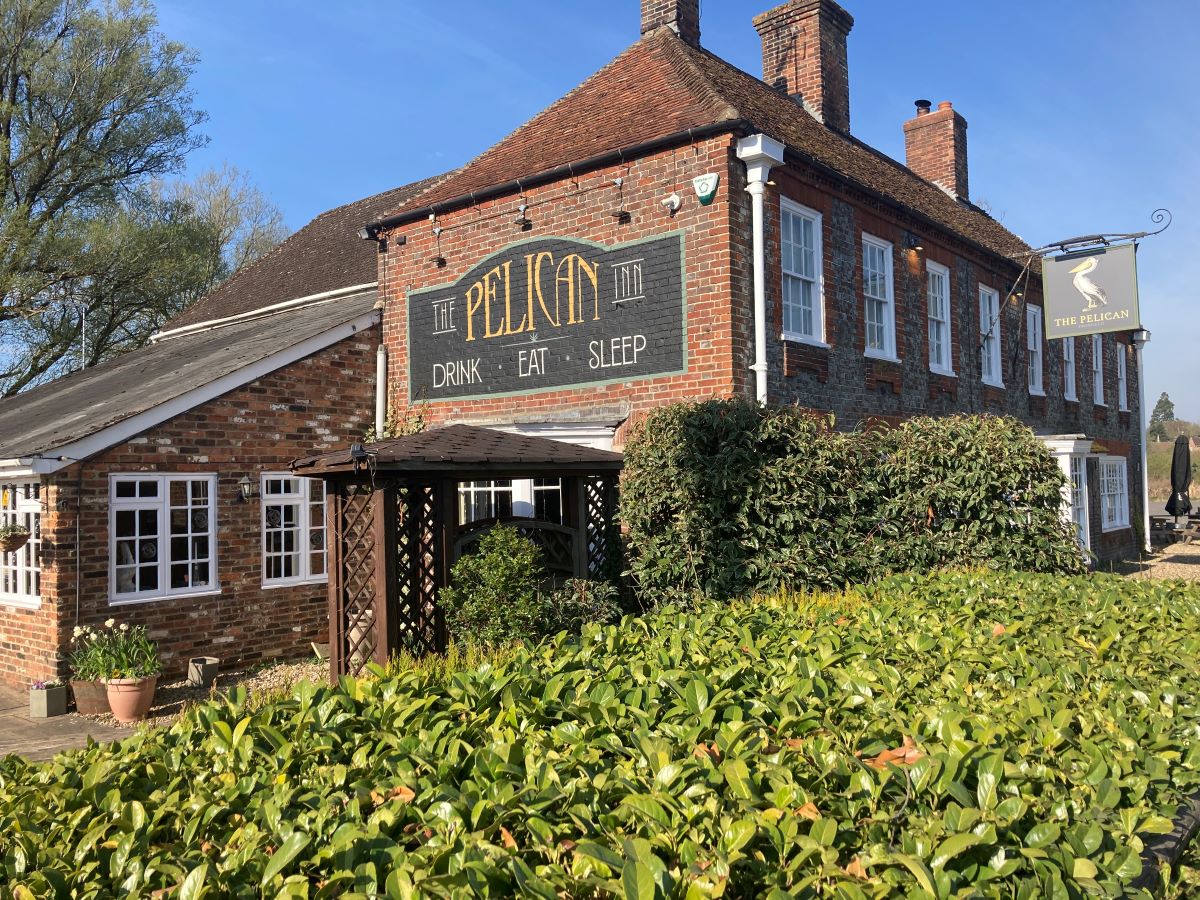
The canal is now following both the railway line and the River Dun which will merge (tomorrow) with the Kennet. But first we will stop at the Pelican Inn, Froxfield for the night.
Day 7 Froxfield to Newbury 10.9 miles
There’s no breakfast at the Pelican so we’re asking you to walk on 2.2 miles into Hungerford (apt name!), passing the magnificent church of St Lawrence along the way, where there are plenty of places to eat.
Hungerford is a small town with a number of shops, cafes and restaurants as well as the historic Bear where William of Orange was offered the Crown of England in 1688 during the “Glorious Revolution”.
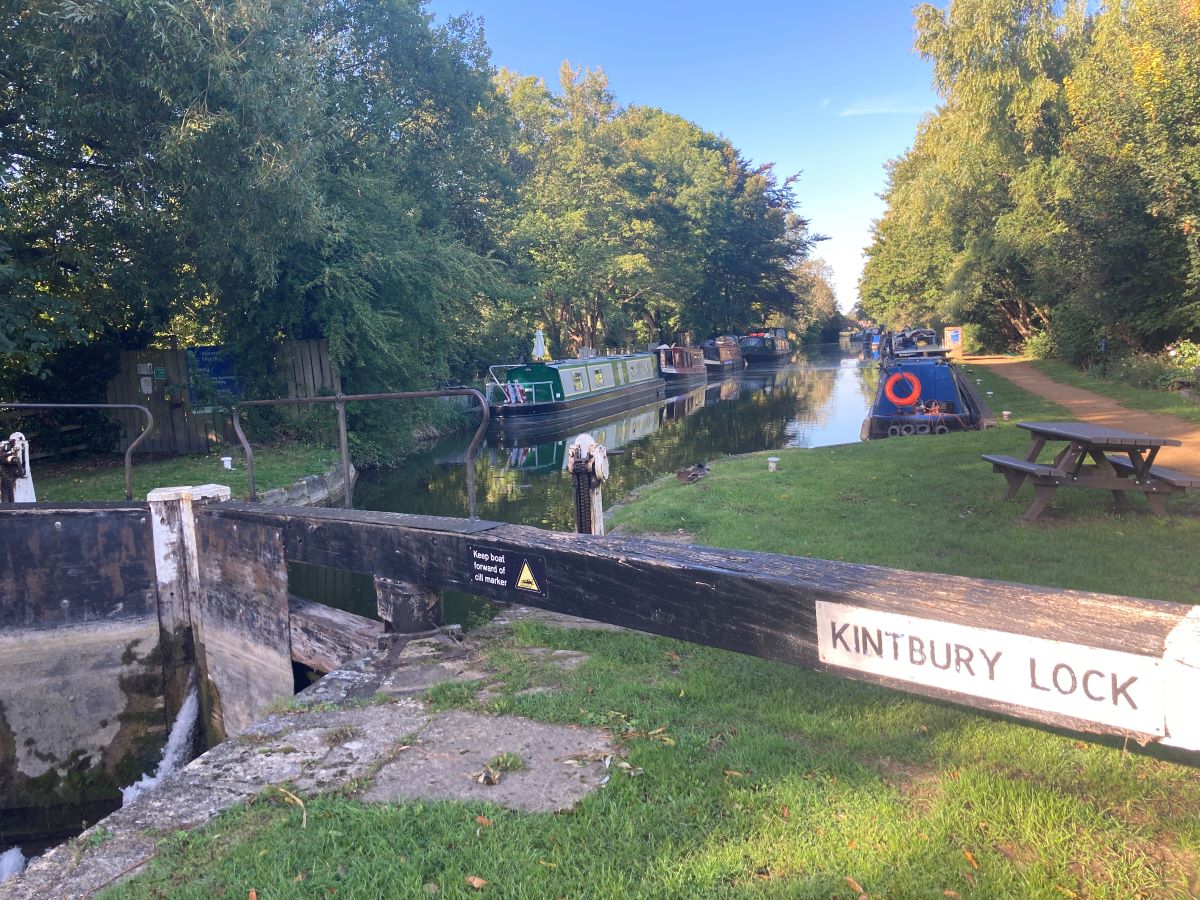
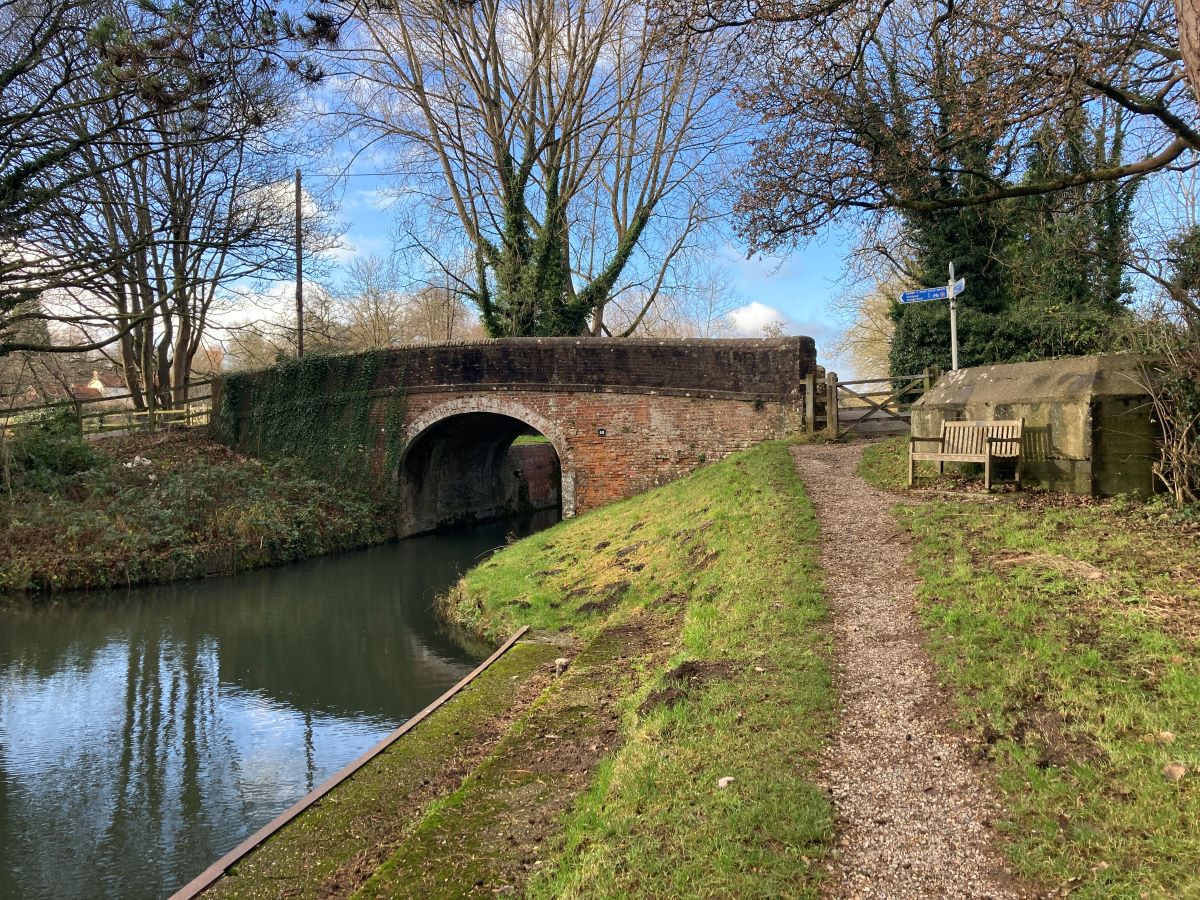
Soon you will pass Dunmill Lock and then Kintbury, today’s half way point. You’ll see a bridge with a piece of railway track attached to it. These are improvised fixings to stop the bricks separating. You will also see how the tow ropes have eroded part of the stone work.
.
The second half of the walk, from Kintbury to Newbury, takes you past Marsh Benham. You will notice that the river and the canal intertwine, the river feeding the canal and the canal discharging excess water into the river. The railway is a constant companion whilst the A4 is some miles to the north. You will pass bridges, locks and the remains of the Lambourn Valley Railway which once crossed the canal. You can see the abutments of the bridge.
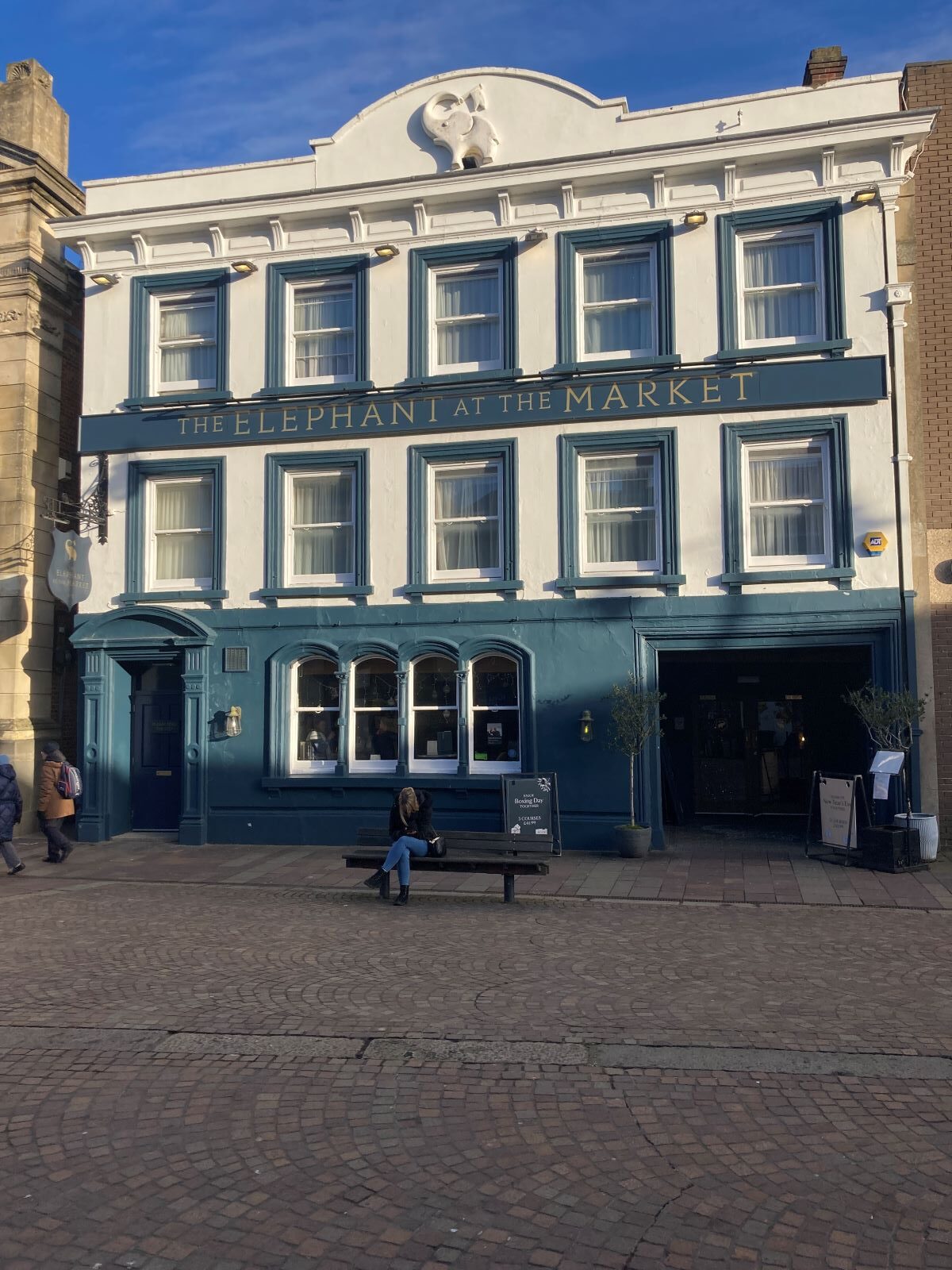
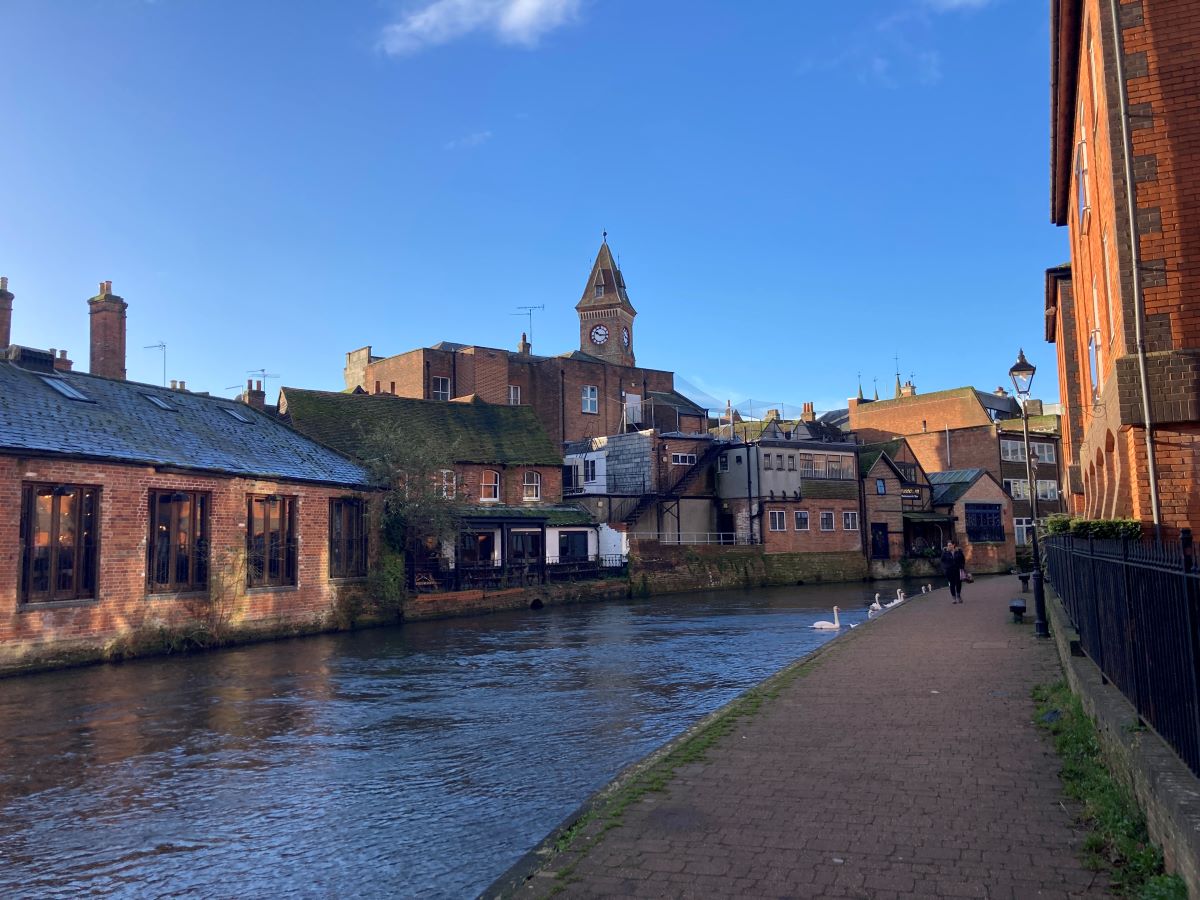
You will soon be in Newbury, your destination for the evening. Newbury is a market town with a famous racecourse which you passed but it was out of view. The market square is dominated by the Corn Exchange, now a cultural venue. The ancient cloth hall now partly houses the West Berkshire Museum. You will stay at the Elephant at the Market which, true to its name, is conveniently located in the market square.
Day 8 Newbury to Aldermaston 9.0 miles
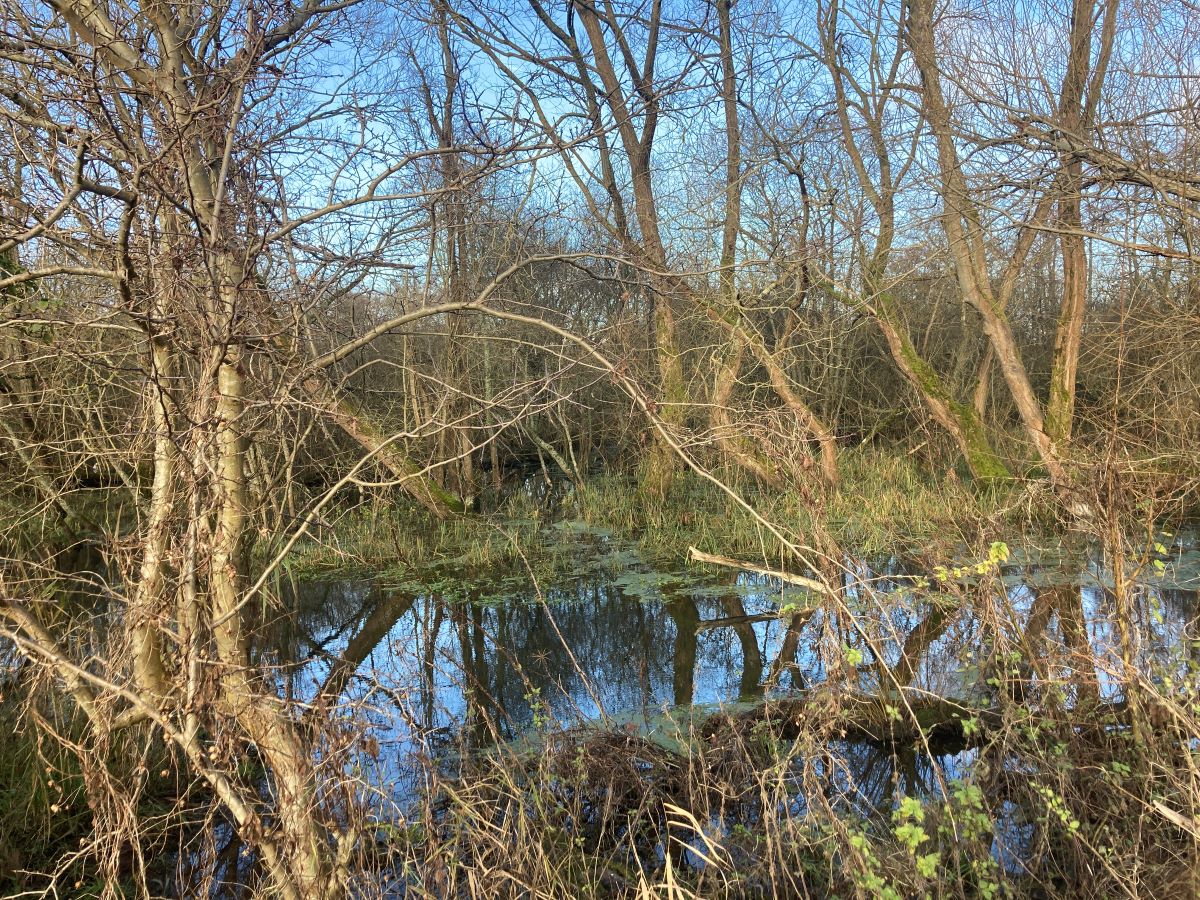
On leaving Newbury you will pass through an area of reedbeds. Time permitting you can detour to visit the Nature Discovery Centre. Approaching Thatcham you see Monkey Marsh Lock, one of only two turf-sided locks on the canal.
The town of Thatcham soon appears The town centre is just under halfway, making it an excellent lunch stop. You’ll find The Swan lies close to the canal. On leaving the town you’ll see a large number of warehouses across the canal. Don’t be surprised if you see a Harrod’s van. They have a state-of-the-art distribution centre here.
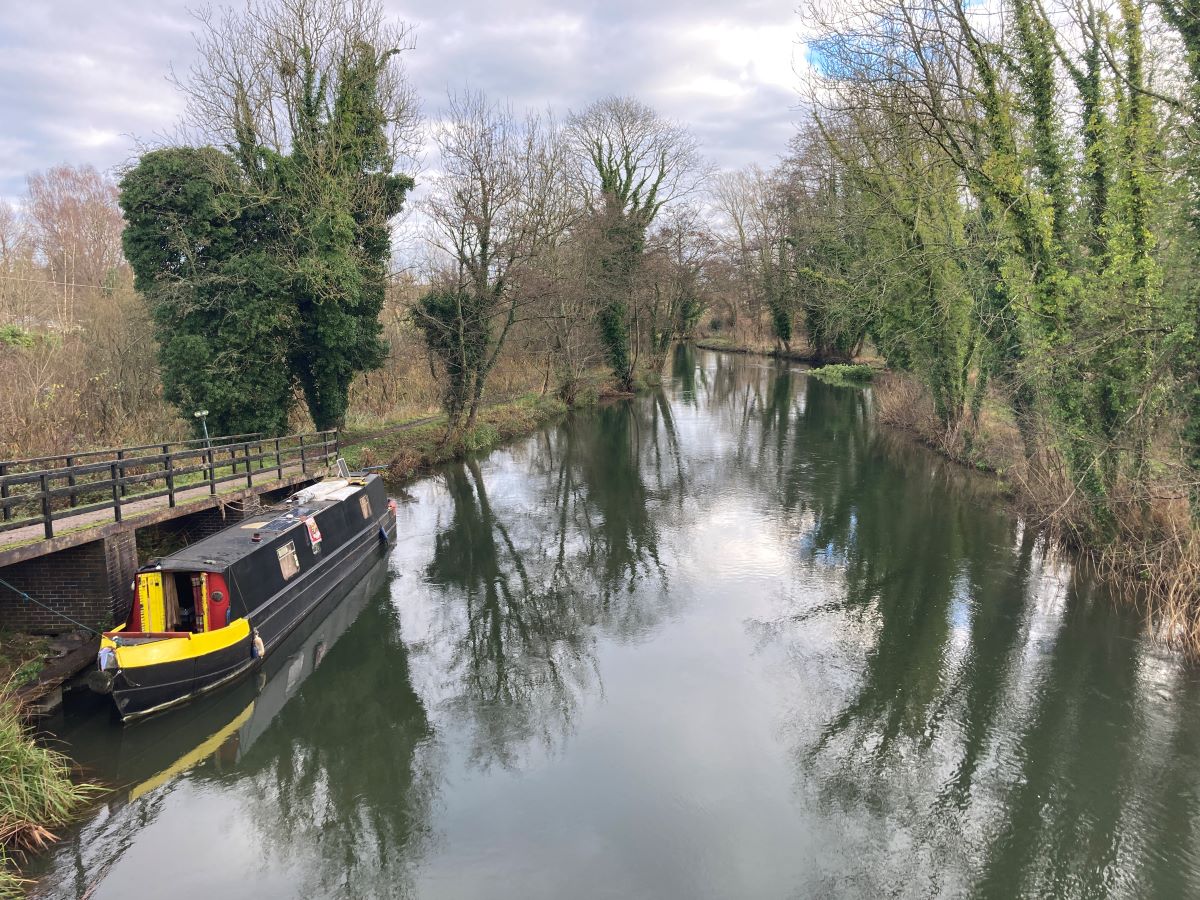
The canal meanders past the villages of Midgham and Woolhampton through dense forests. It’s one of the loveliest stretches of the canal. The Row Barge at Woolhampton will be a welcome stop for a cup of tea.
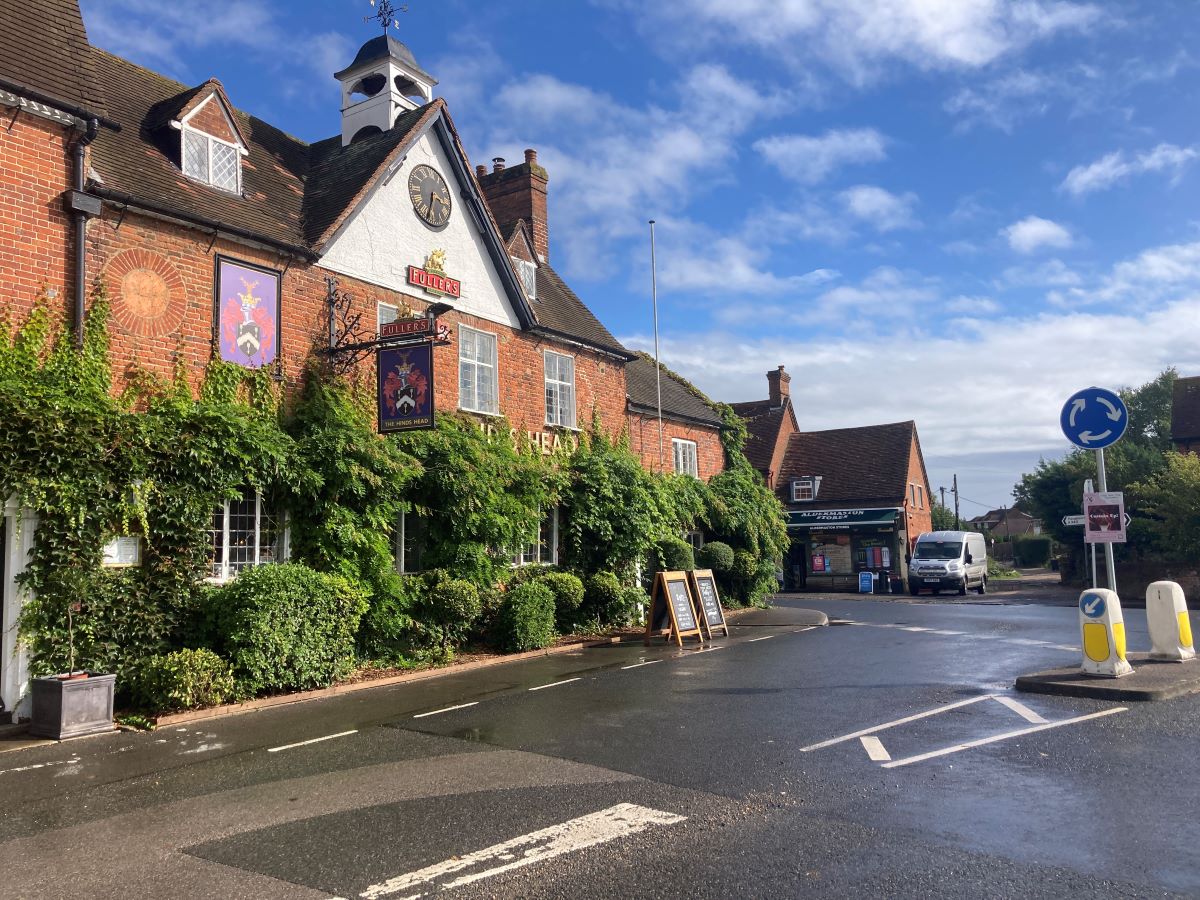
A series of footpaths will take you away from the canal to the village of Aldermaston and the Hinds Head, a popular pub with rooms above. Aldermaston is famous for the anti-nuclear marches of the 1960’s with the Atomic Weapons Establishment housed on a hill high above the village. You won’t have to return the same way tomorrow as you’ll rejoin the canal further along.
Day 9 Aldermaston to Reading 11.5 miles
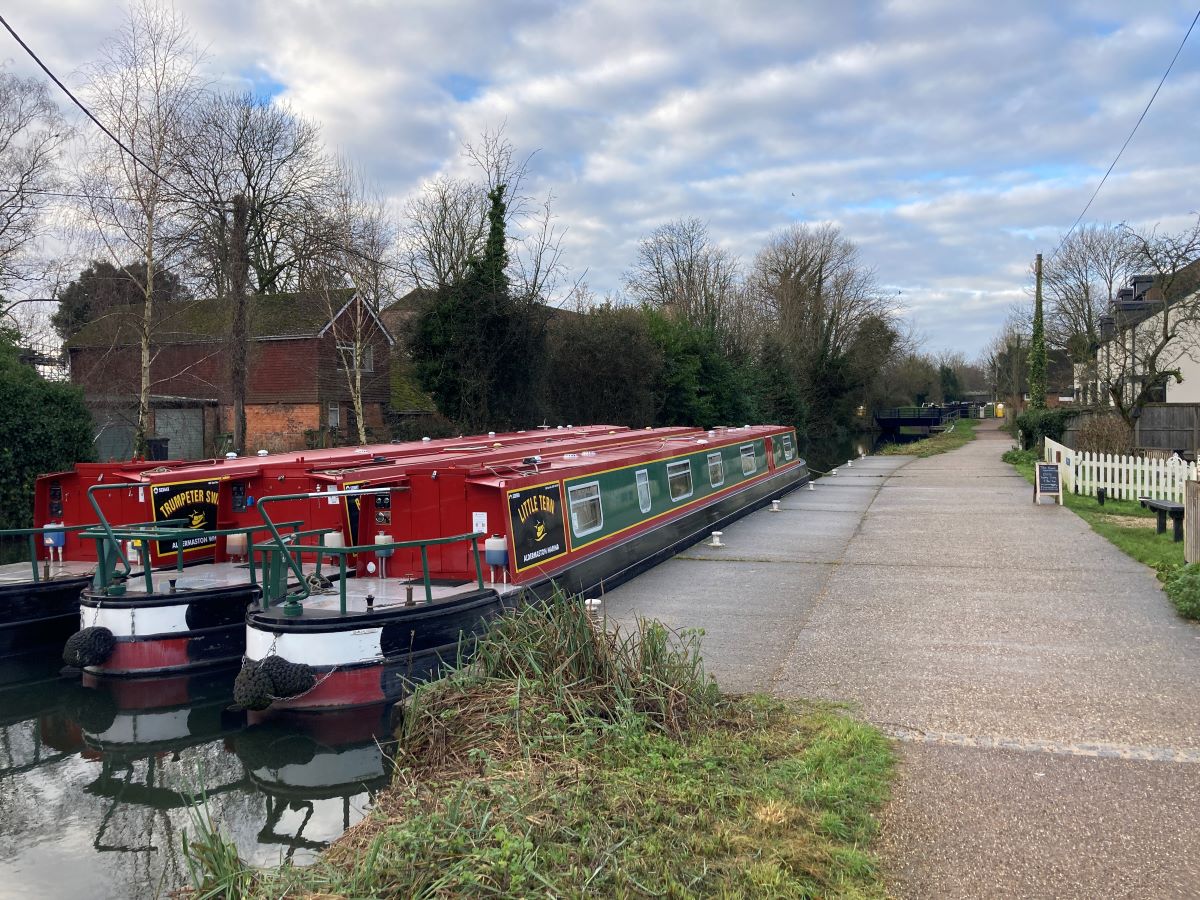
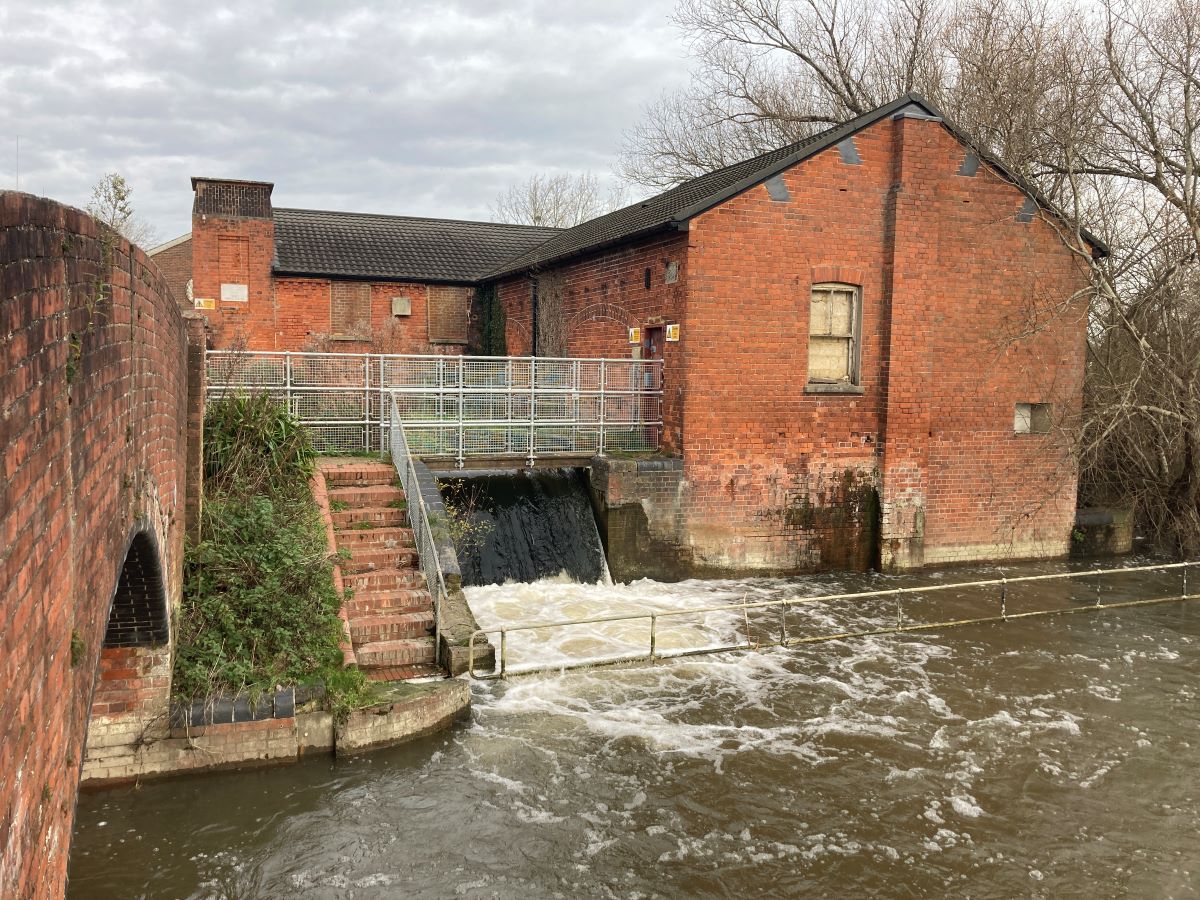
It’s a short 1.8 mile walk through fields and across a series of weirs to get back onto the canal at Aldermaston Wharf, a busy place as it’s a base for a narrowboat holiday business. There’s a small visitors’ centre here with a welcoming tea shop.
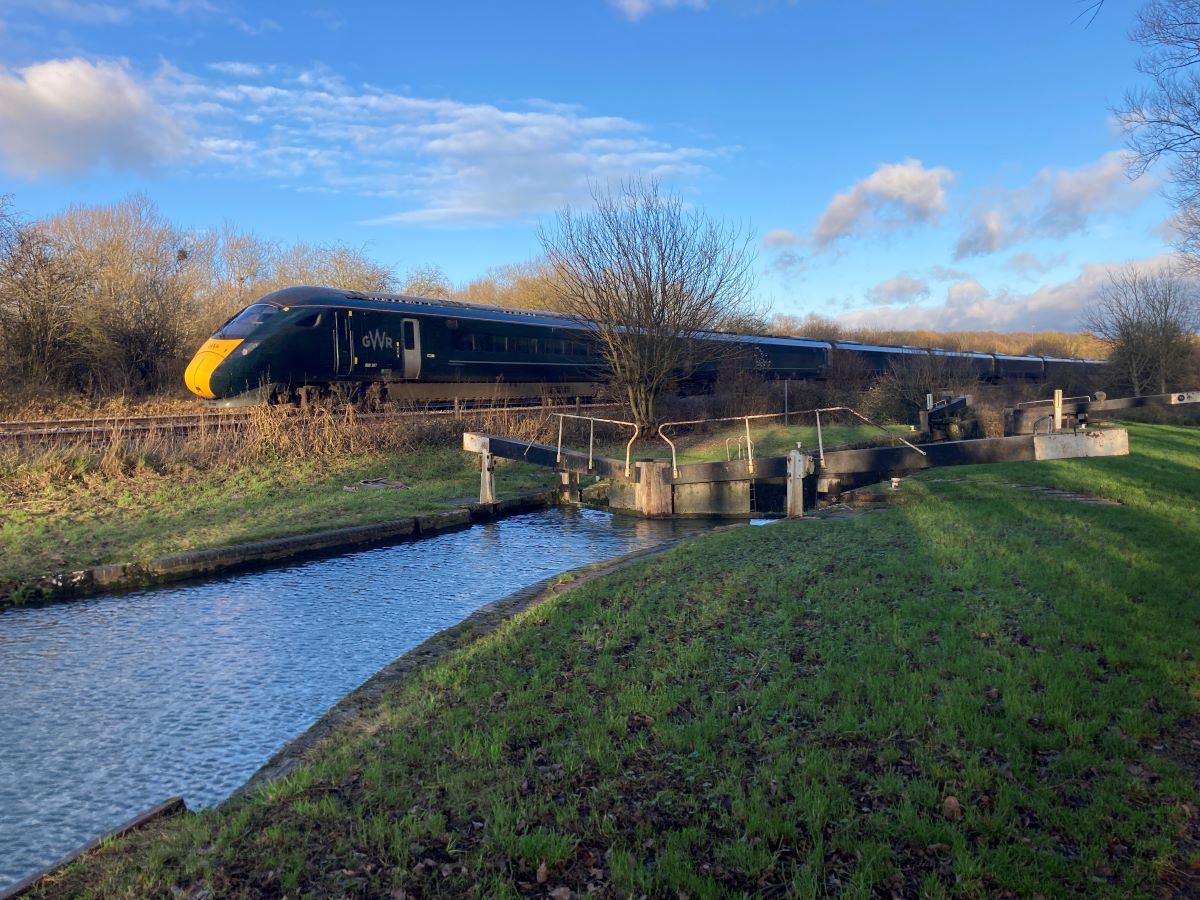
The canal is following both the Great Western Railway and the A4, three editions of the Great West Way running in parallel. There’s never a dull moment as, every mile or so, you encounter a swing bridge or a lock.
Just before Fobney Lock is Fobney Island Nature Reserve, a coming together of marshland, hay and wildflower meadows and reed beds. It is a haven for birds, bats, reptiles and insects. At the lock, the canal turns sharply north as it approaches Reading.
Despite your proximity to the largest town in England it’s surprisingly quiet. Aside from the distant rumble of the M4, the only sounds you will hear will be those of the many birds that are attracted to the canal.
You first signs of Reading are the gardens of Victorian terraced houses backing onto the canal on the other side. The canal passes through the Oracle shopping centre with restaurants on either side.
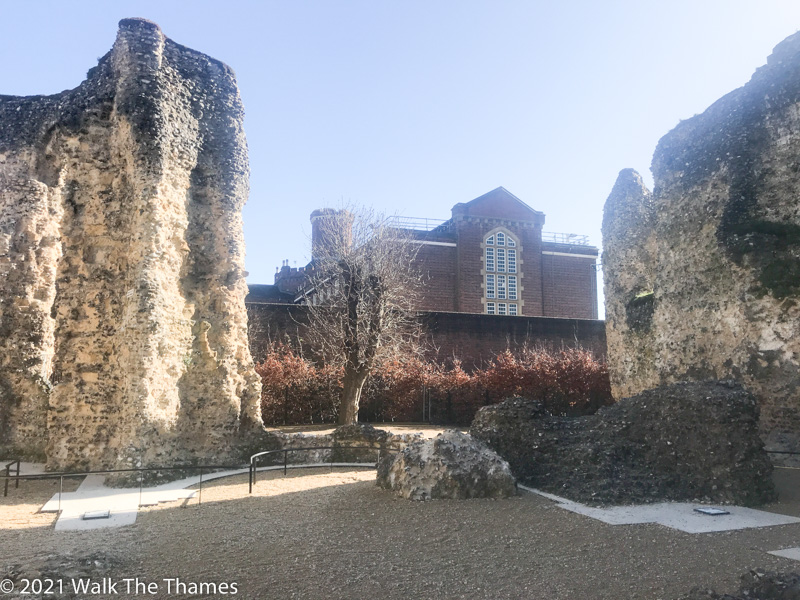
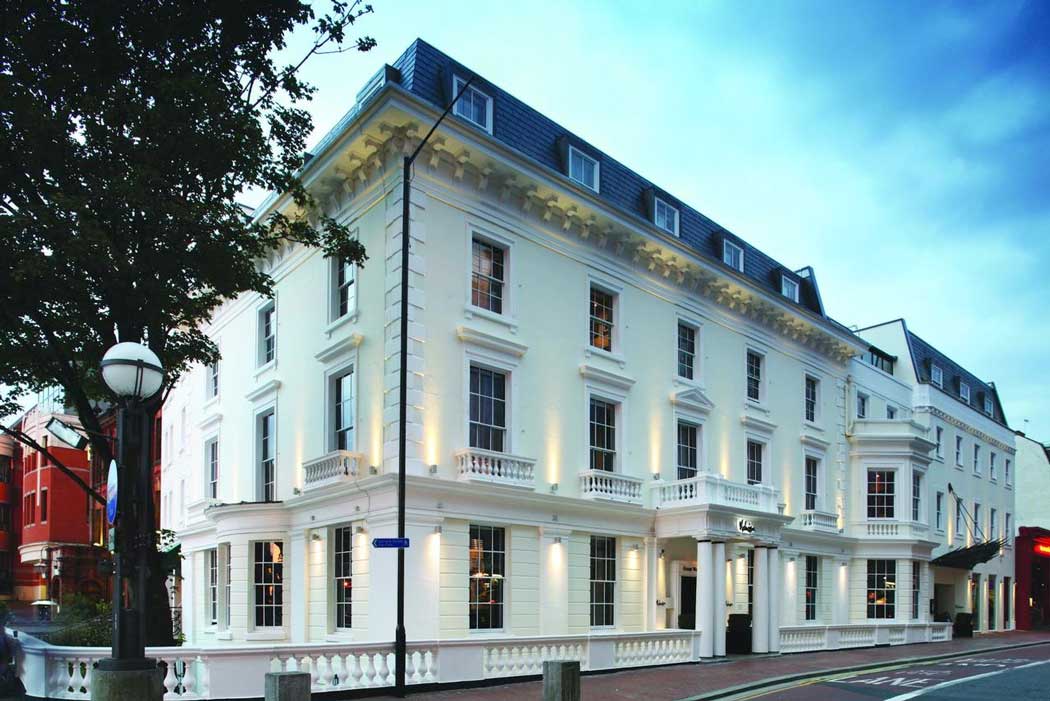
You will now bid farewell to the canal as you walk through the ruins of Reading Abbey, the starting point for the St James’ Way, and to Malmaison, your home for the night.
Day 10 Reading to Hambleden 12.0 miles
It’s a half mile walk through the town centre to reach the Thames at Reading Bridge, or you can return to the Kennet and Avon Canal which meets the Thames a little downstream from Reading Bridge. You follow the right bank of the river until you reach Sonning three miles later. Sonning is a delightfully pretty village. In fact, it is so beautiful that it has become popular with the rich and famous: George Clooney and Teresa May both live here.
You cross the river and follow the left bank for 3.3 miles to Shiplake, a small village that makes a suitable lunch spot with a pub and shop.
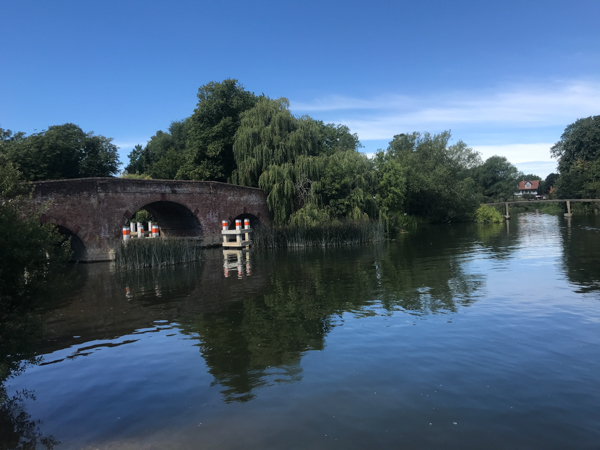
It’s an easy 2.5 miles to your destination of Henley. At Marsh Lock the path takes you on boardwalks across the river to the lock on the other side. As you approach Henley you will pass the River and Rowing Museum, a great place to stop and learn.
Note: the boardwalk is currently closed and a temporary diversion is in place passing through Harpsden Woods. This adds an extra mile to your walk.
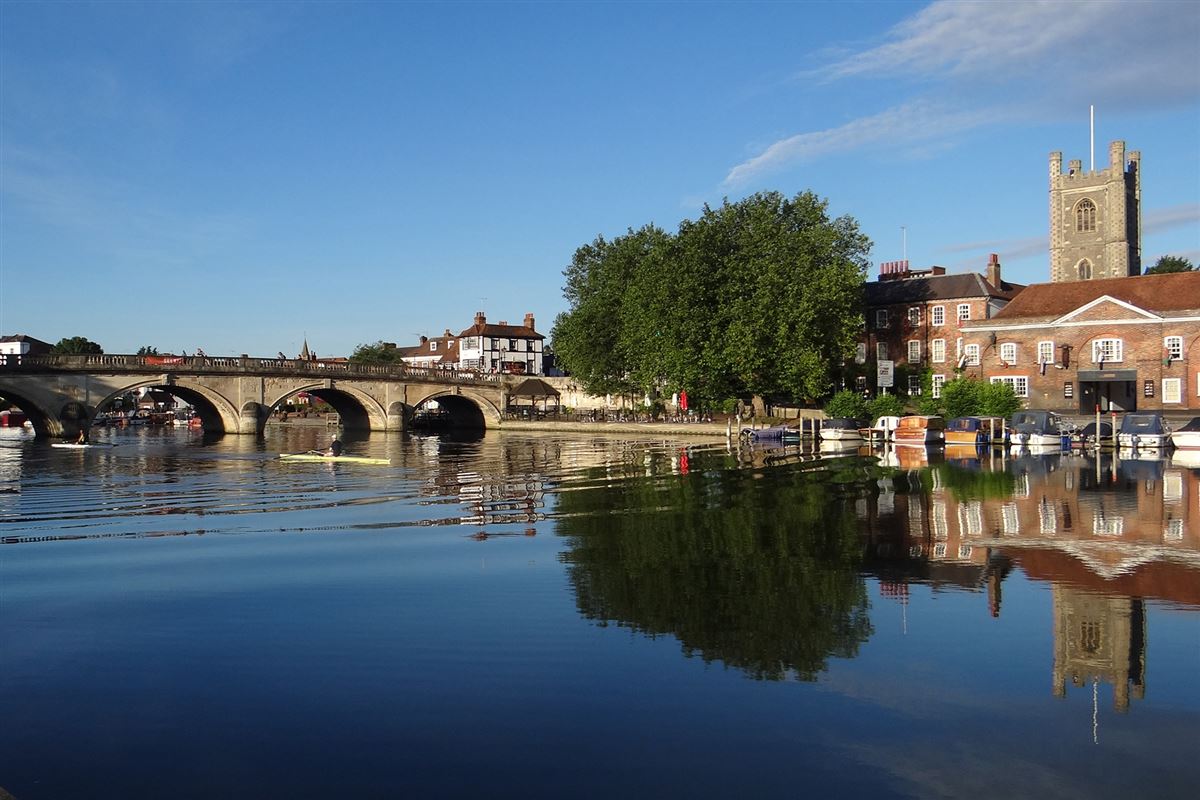
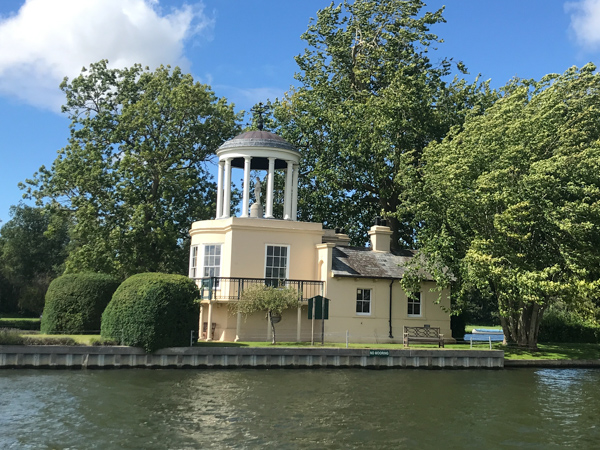
Across the bridge at Henley you pass in front of the famous Leander Club, home of British rowing and follow the river as it skirts the edge of the Chiltern hills, passing Temple Island which marks the start of the annual regatta.
It’s a short walk of less than a mile to Hambleden, a pretty village of brick and flint cottages. St Mary’s church dates from the 14th century. Hambleden was the home of William Henry Smith, founder (in 1821) of a famous chain of bookshops; and Lord Cardigan, famous for his role in leading the ill-fated Charge of the Light Brigade.
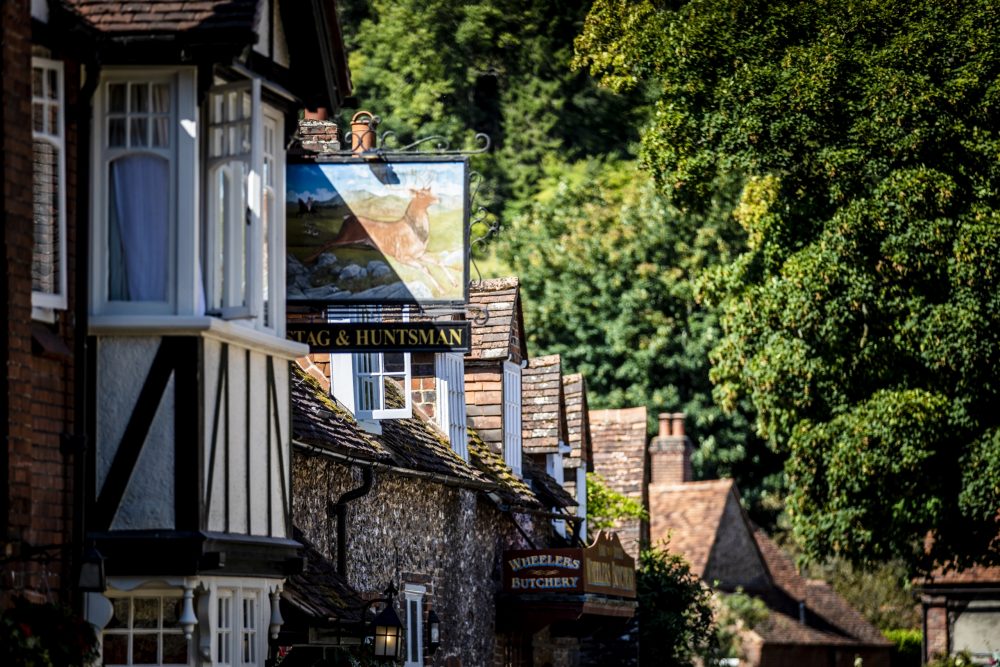
The Stag and Huntsman can be found in the heart of this picture-postcard village. The building is timber-framed with wood sourced locally from the nearby forests. The inn sits on the Culden Faw Estate which you have been walking through for the last few miles. There are eight ensuite bedrooms with large comfortable beds and indulgent bathrooms. Seasonal dishes are served throughout the day.
Day 11 Hambleden to Cookham 12.1 miles
Shortly after rejoining the river at Hambleden you will leave it briefly and walk through the estate of Culham Court, another beautiful mansion complete with a park full of white deer.
After 4.5 miles from Hambleden you will arrive at the lovely village of Hurley, a great place to stop for lunch: there are two pubs and a tea shop. It’s a popular spot for picnics.
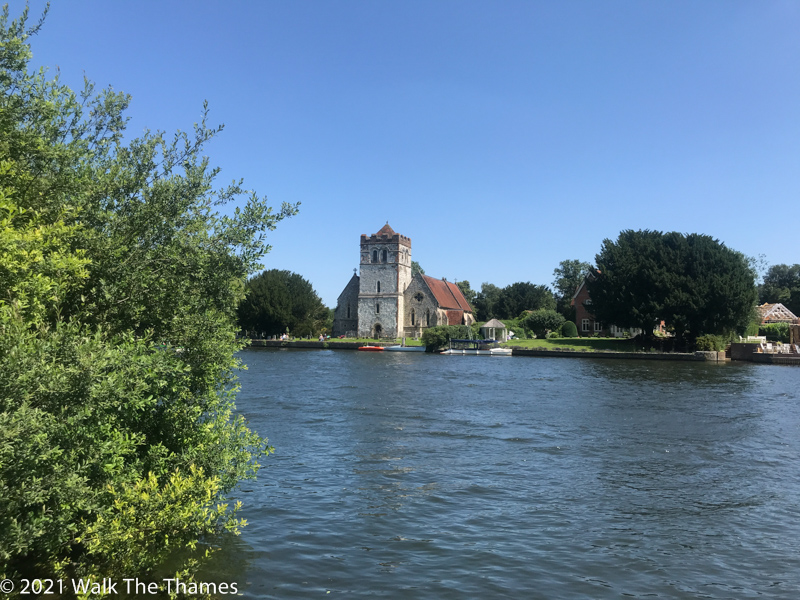
As you leave Hurley, you will see Bisham Abbey across the river. It’s home to the National Sports Centre. Marlow, with its magnificent suspension bridge, is two miles away. Note: there is a diversion currently in place which means you will pass on the same side of the river as Bisham Abbey allowing you to visit.
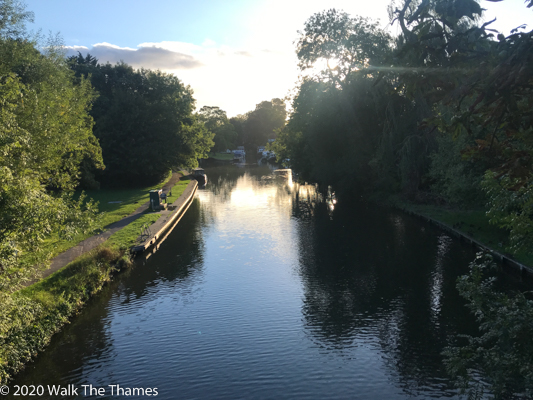
Past Marlow you will cross the river at Bourne End and it’s a short hop through Cookham Marsh where you should see plenty of sailing dinghies.
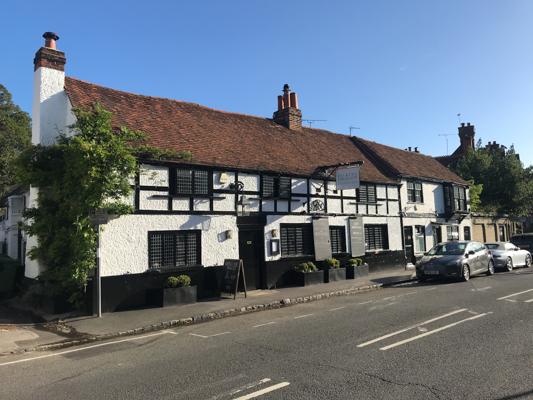
Cookham is a pretty village by the river with a good choice of restaurants. You will be staying at Bel and the Dragon, a 600 year old coaching inn.
This is the only night on the itinerary where you are staying in a small village. So enjoy the peace and quiet that Cookham offers. Cookham Moor, which lies just behind the hotel, is an ancient common now owned by the National Trust. Villagers once had the right to graze their animals on this land.
If you get a chance, you should visit the Stanley Spencer Gallery. Spencer was born in Cookham in 1891 and lived there all his life. The gallery is open until 5.30pm in the summer months.

Day 12 Cookham to Windsor 9.9 miles
What a treat we have in store for you today! Within minutes of setting off to rejoin the Thames from your hotel you will see, in the distance, one of the greatest country houses in England: Cliveden.
Cliveden was home to the Astor family and is, of course, the infamous site of the Profumo affair. In fact, a few yards further on, you will see Spring Cottage which Stephen Ward rented.
The walk down to Maidenhead is firm underfoot and you will pass between the river and the gardens of many a grand house.
You arrive at Maidenhead bridge at about half way. The town is a mile away but there is a shop and a hotel by the bridge where you can get lunch. Unless you have something more grand in mind: for a mile further on you will see, temptingly across the river, the Waterside Inn at Bray. Bray is home to two of only five “Michelin three star” restaurants in the country, the other being Heston Blumenthal’s Fat Duck.
The stretch of the Thames to Dorney is through wooded glades and you will see Bray Film Studios and Oakley Court (where many Hammer Horror films were made). At Dorney Lake, site of the rowing events in the London Olympics, the vista opens up and you will see Windsor Castle calling you in the distance.
Having hopefully arrived in the early afternoon you should have time to explore this wonderful town. You also have a short day tomorrow so you could postpone some until then.
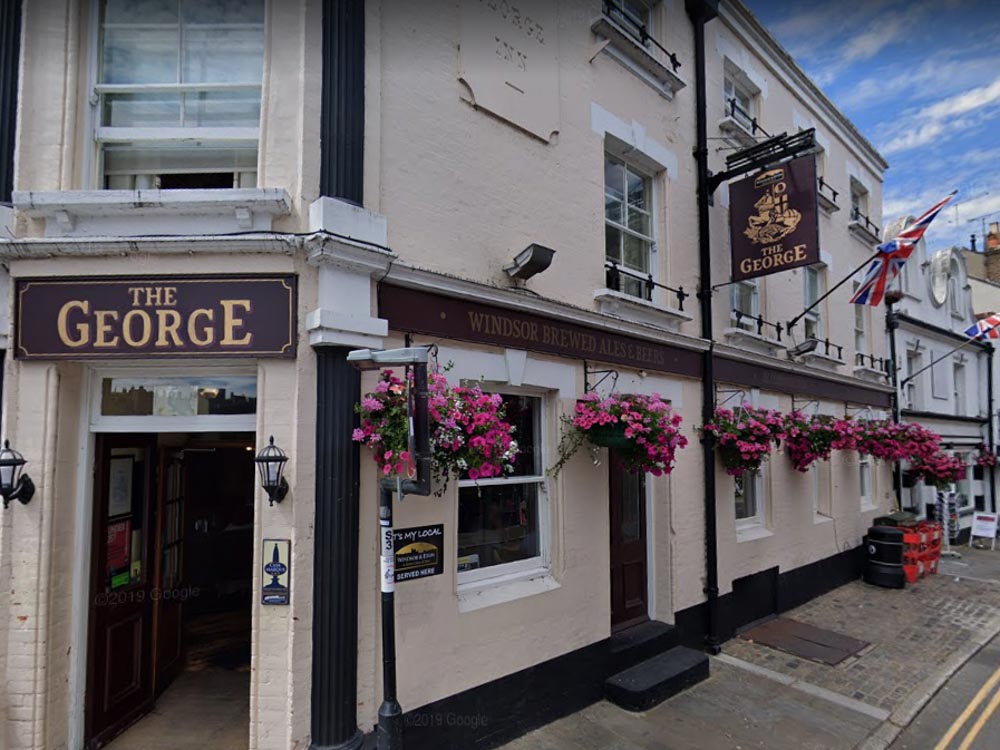
You will be staying at The George at Eton, a stone’s throw across the river from Windsor. After a short rest, take a walk across the bridge and up the high street and admire the castle on your left. It’s the longest-serving royal residence in Europe. It’s open until 5.15pm so you should have a chance to visit.
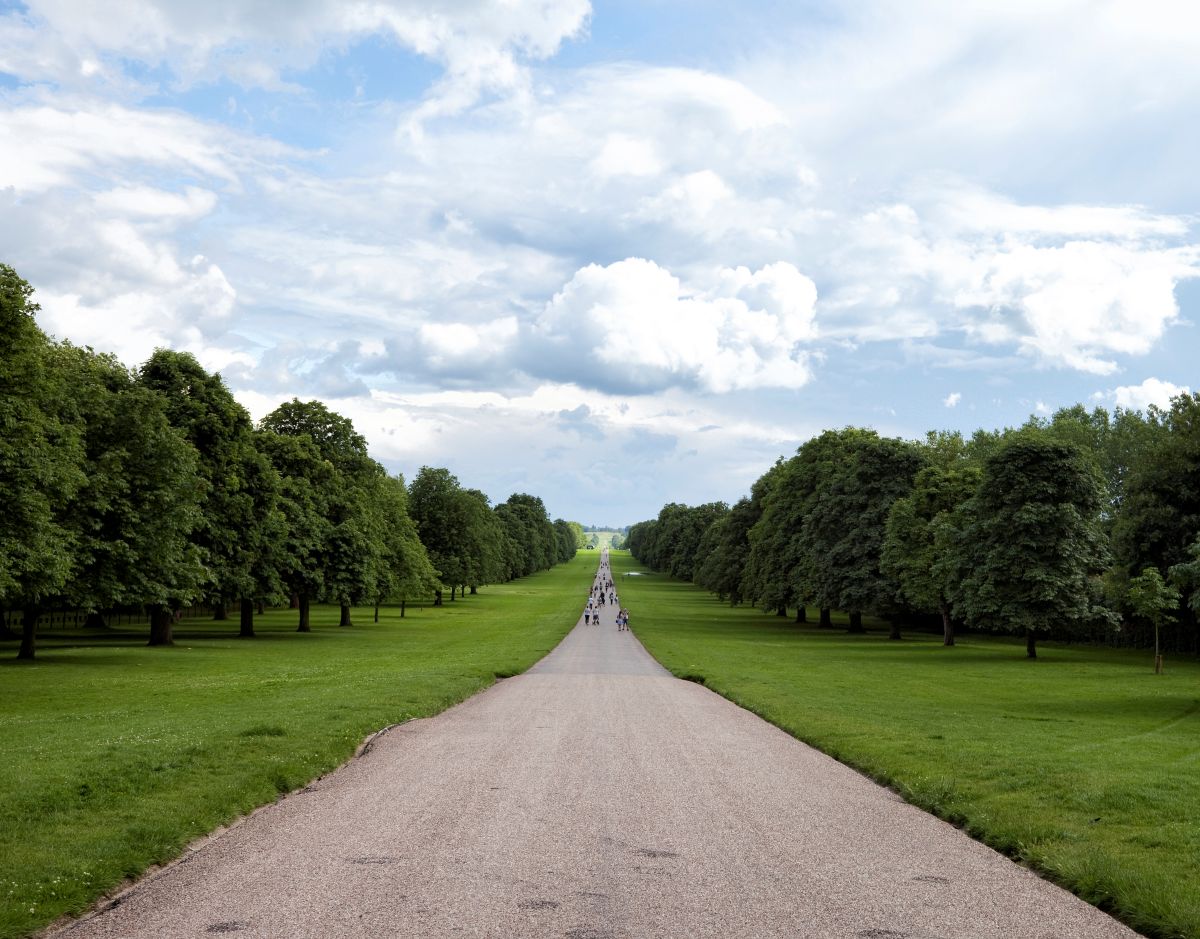
At the end of the high street is Park Street. Go to the end and you will step onto the Long Walk, a carriageway that leads straight from Windsor Castle, through Windsor Great Park, to a statue of George III just visible three miles away. This is the route that the monarch takes every year when they visit Royal Ascot.
Back at your hotel, you can wander in the other direction towards Eton College, the most famous school in the world. The school is not a campus. Its buildings straddle the high street so you can quite easily get a glimpse of school life as boys rush between buildings dressed in their morning coats. Tours are offered on Friday afternoons between April and August.
Day 13 Windsor to Chertsey Bridge 12.1 miles
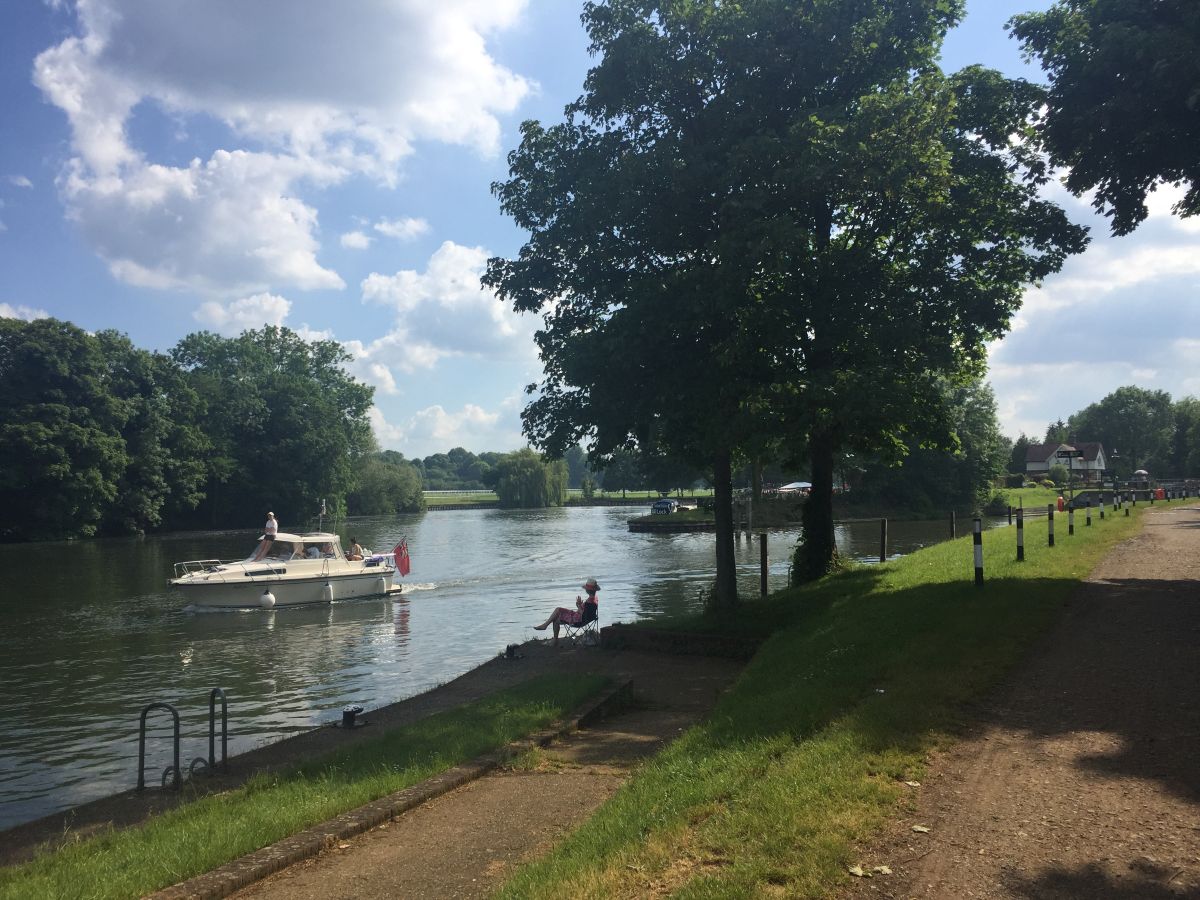
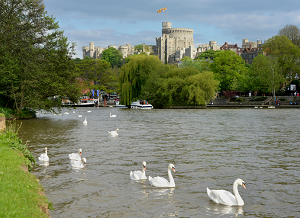
The Path follows the Thames out of Windsor where you will have good views of Windsor Castle across the Home Park. You will soon pass the village of Datchet and then Old Windsor where you can stop at the Bells of Ouzeley for refreshments.
An alternative is to go through Windsor town centre and follow the Long Walk through Windsor Great Park and rejoin the Thames at Runnymede. It’s not officially the Thames Path but it’s a jolly good detour and about the same distance.
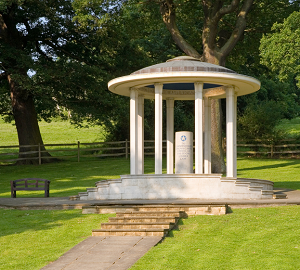
Once out of Old Windsor you will walk through the fields of Runnymede where King John reluctantly signed Magna Carta back in 1215. There are a number of monuments here worth visiting: the Magna Carta and JFK Memorials both being close to the Path. The Air Force Memorial on top of Cooper’s Hill is also worth a visit. Although further, on a fine day you will be able to see London in the distance.
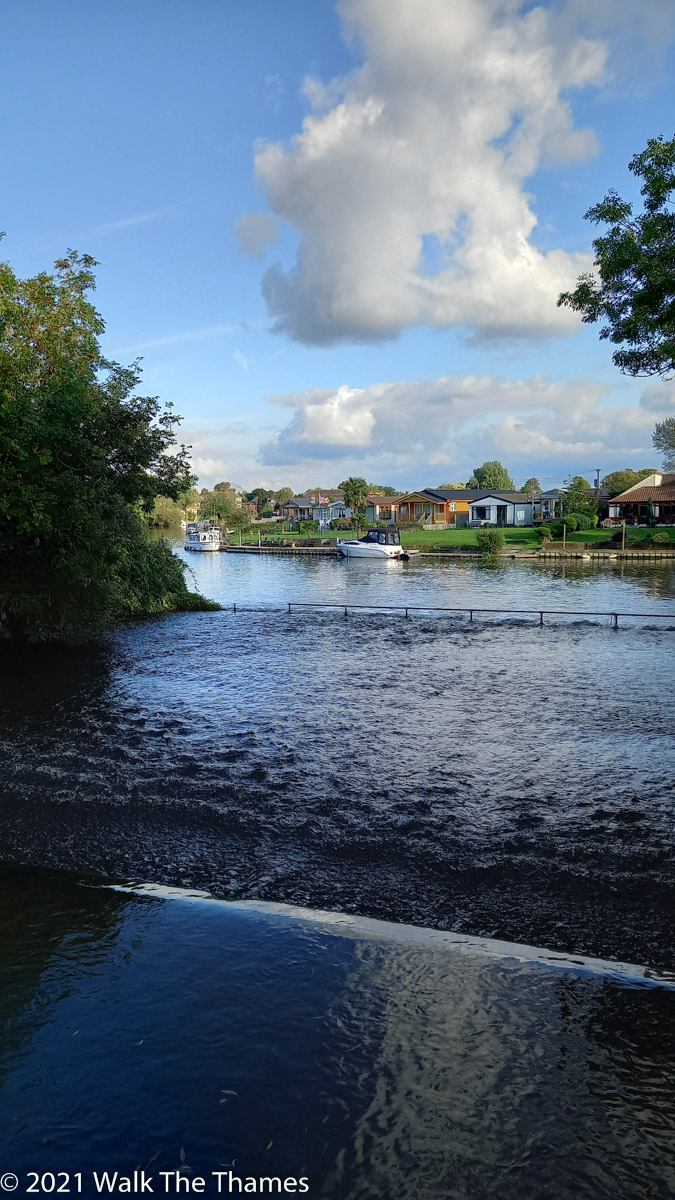
The town of Staines lies just beyond Runnymede after which you will follow the riverbank past Laleham and the lovely Penton Hook Island all the way to Chertsey.
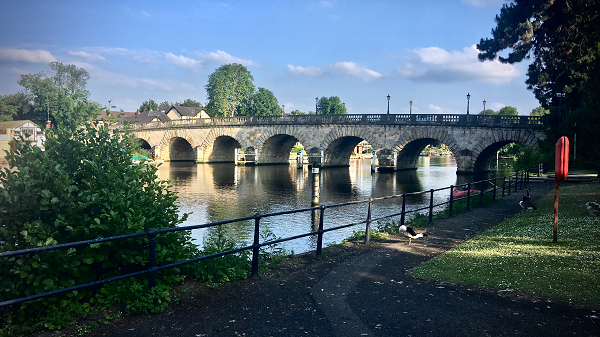
The historic town of Chertsey lies a mile to your right. Thankfully you don’t have to walk there as you will be staying at The Bridge, a lovely hotel overlooking the river. The hotel offers all day dining. Chertsey Bridge, comprising seven arches, is one of the most beautiful bridges on the Thames and was completed in 1785.
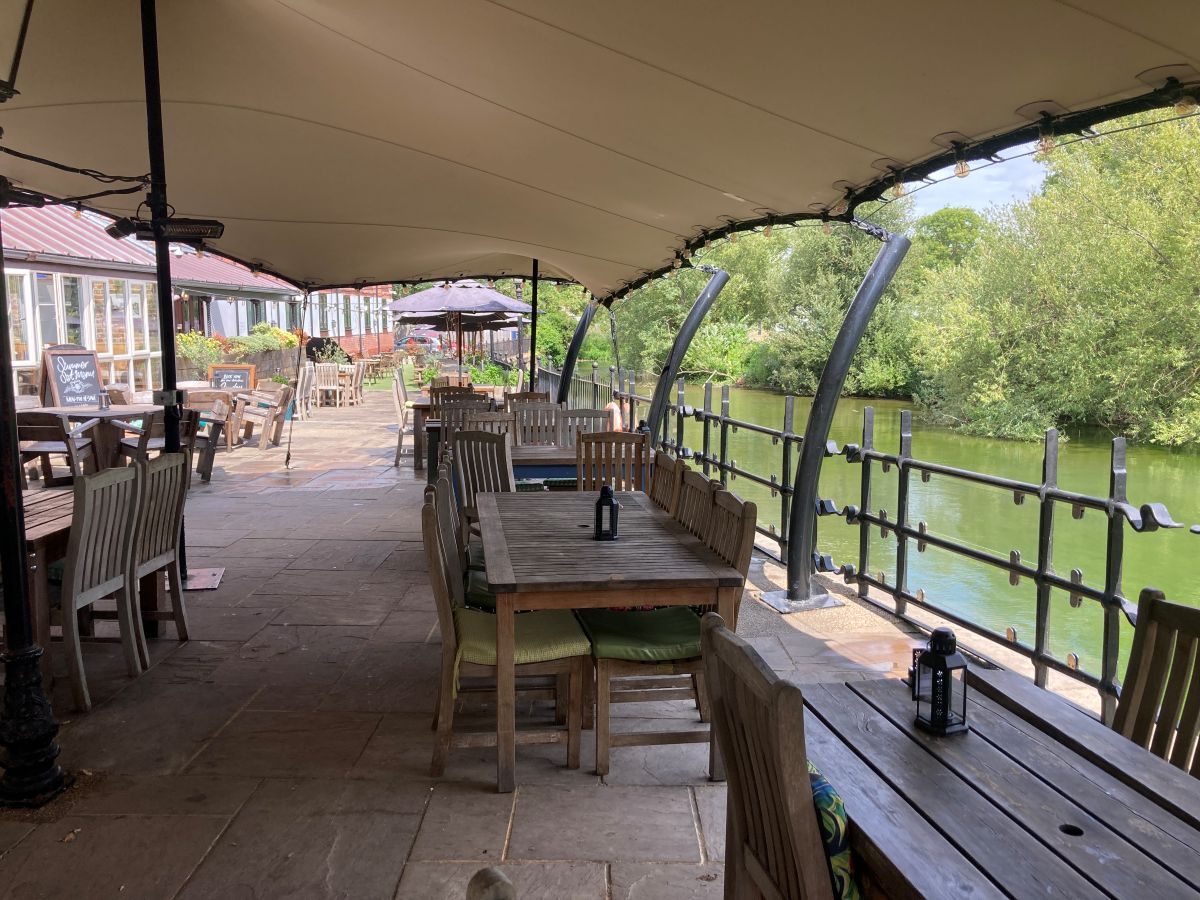
Day 14 Chertsey to Kingston-on-Thames 11.2 miles
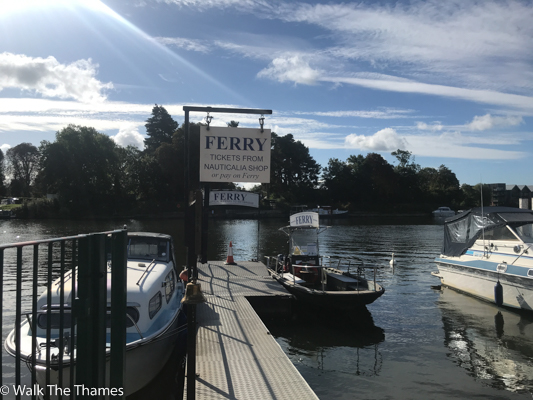
On leaving the hotel, you will pass through the last fields of the Path (the rest of the path is firm underfoot with either gravel or tarmac). You soon arrive at Shepperton Lock where a treat awaits. The Path continues on the other side of the river and a boat will take you across for a nominal fee. Although it leaves every 15 minutes you must still ring the ship’s bell!
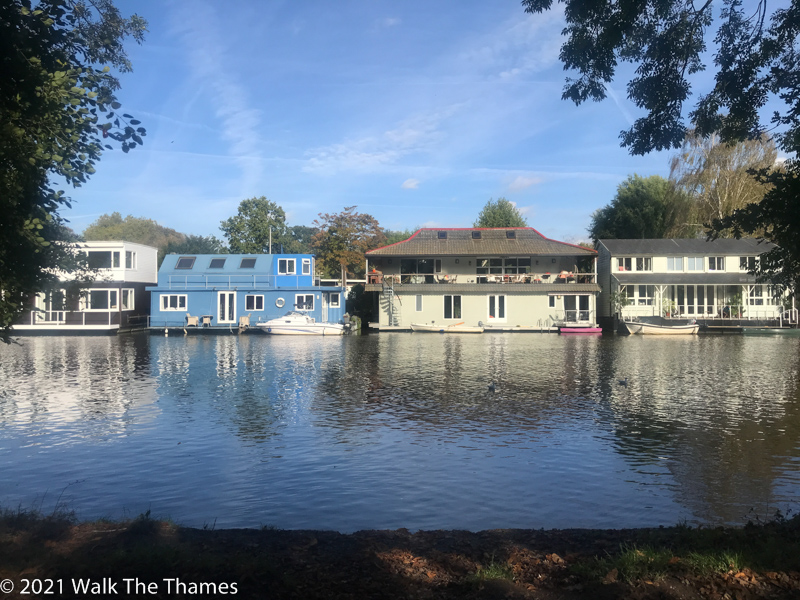
Once on the other side you follow the “cut” to Walton where there is a welcome café by the bridge. Leaving Walton you will see the picturesque town of Sunbury on the other side of the river. There’s no way to cross. Instead you must content yourself with the reservoirs that line your side of the Thames, some of which are now nature reserves. You soon arrive at Hampton Court after passing many houseboats that line the river.
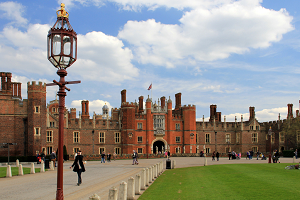
The Thames Path conveniently crosses the bridge at Hampton Court to where the Palace lies. The Palace was built by Cardinal Wolsey during the reign of Henry VIII. He gave it to Henry in 1529 in an effort to stay in his favour having failed to get the Pope to grant an anullment for his marriage to Catherine of Aragon. Wolsey died a year later. The Palace was one of Henry’s favourites and still belongs to the Crown. The Palace, with its Great Hall, Tudor kitchens and extensive gardens and maze is well worth visiting.
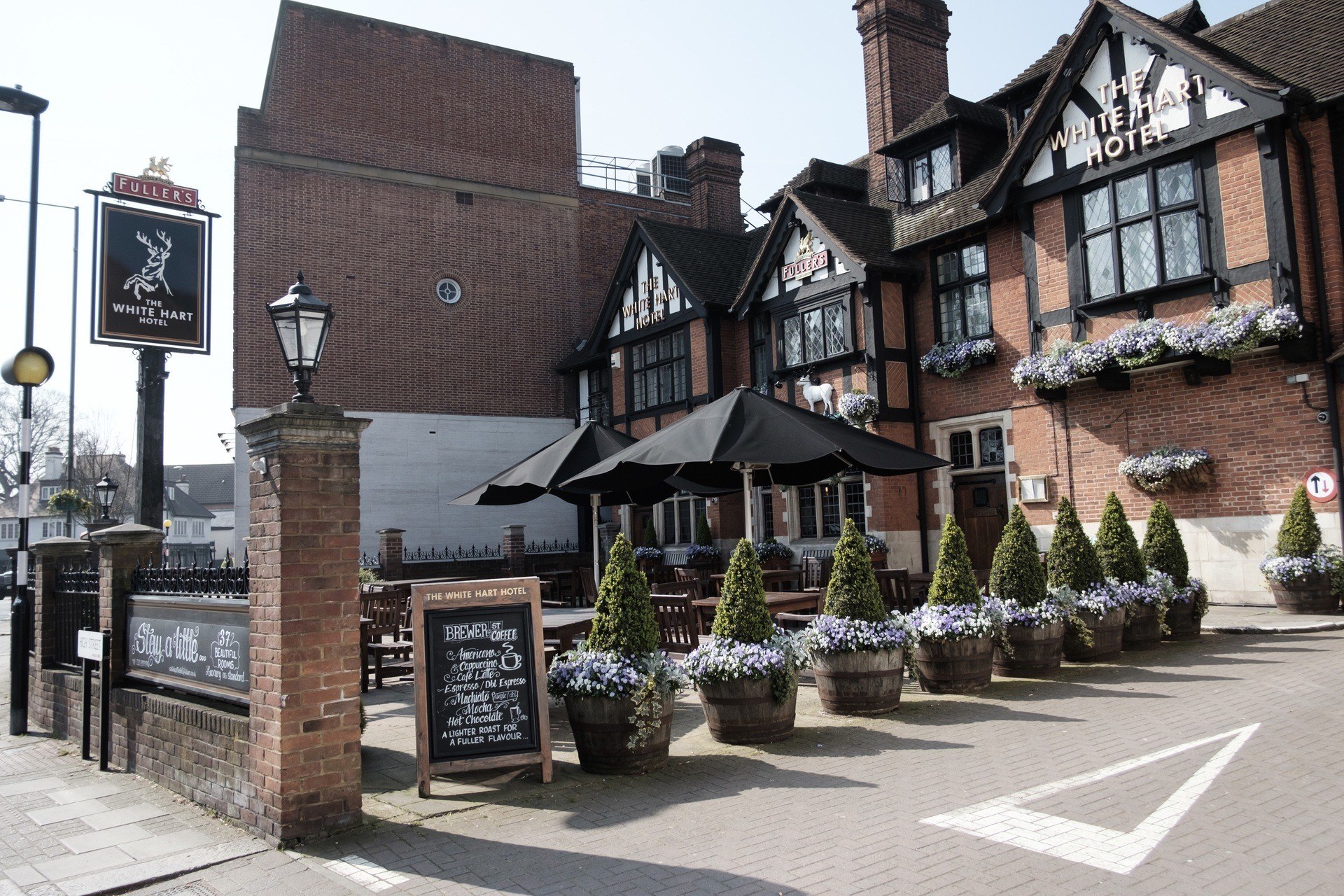
Three miles further lies Kingston, once the coronation site of Saxon kings. Now it’s a modern commercial centre. It also marked the starting point of Jerome K Jerome’s Three Men in a Boat. Just across the bridge from Kingston is the village of Hampton Wick where you will find the White Hart, a popular inn with Thames Path walkers.
Day 15 Kingston-on-Thames to Hammersmith Bridge 11.4 miles
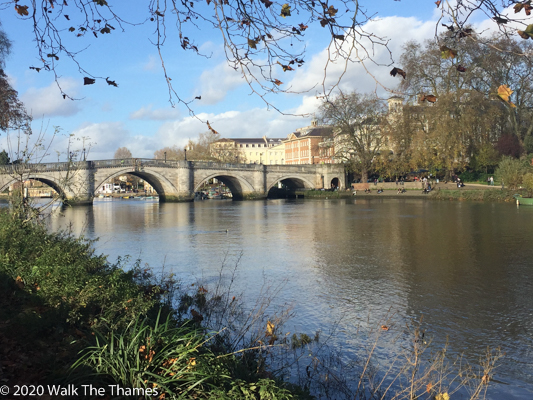
From Kingston the river starts to meander as it works its way into London through the suburban towns and villages. The first of these is Teddington where the river becomes tidal. From here you have the choice of walking on the right or left banks all the way to Greenwich. As there are a number of places along the way for you to visit, your choice of which side might be dictated by these. But you can chop and change crossing the many bridges
On the right bank is Ham House, a National Trust property, Richmond and Kew. In fact, you will also pass the back of Kew Gardens as well as one of the entrances. Beyond Kew are Mortlake and Barnes. The right bank is surprisingly green considering that we’re only 10 miles from the capital with the London Wetland Centre close by.
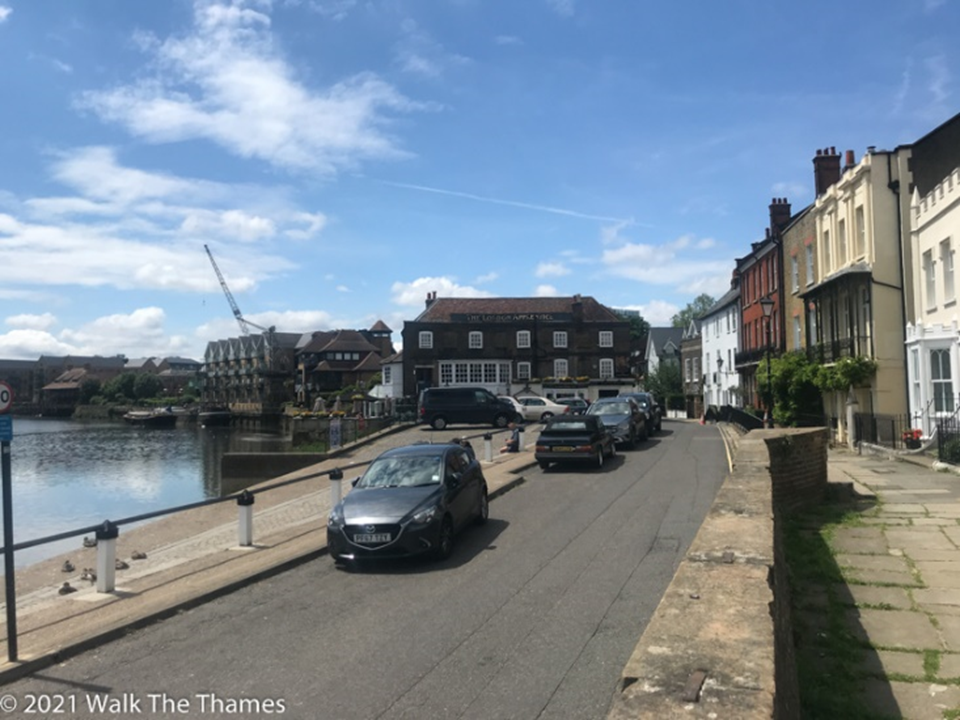
The left bank is more urban, passing through Twickenham, Isleworth, Brentford and Chiswick . You will walk past Syon House, the home of the Duke of Northumberland, Marble Hill House, the fabulous Chiswick Mall with its famous brewery nearby, and Kelmscott House, the London home of William Morris.
The Destination
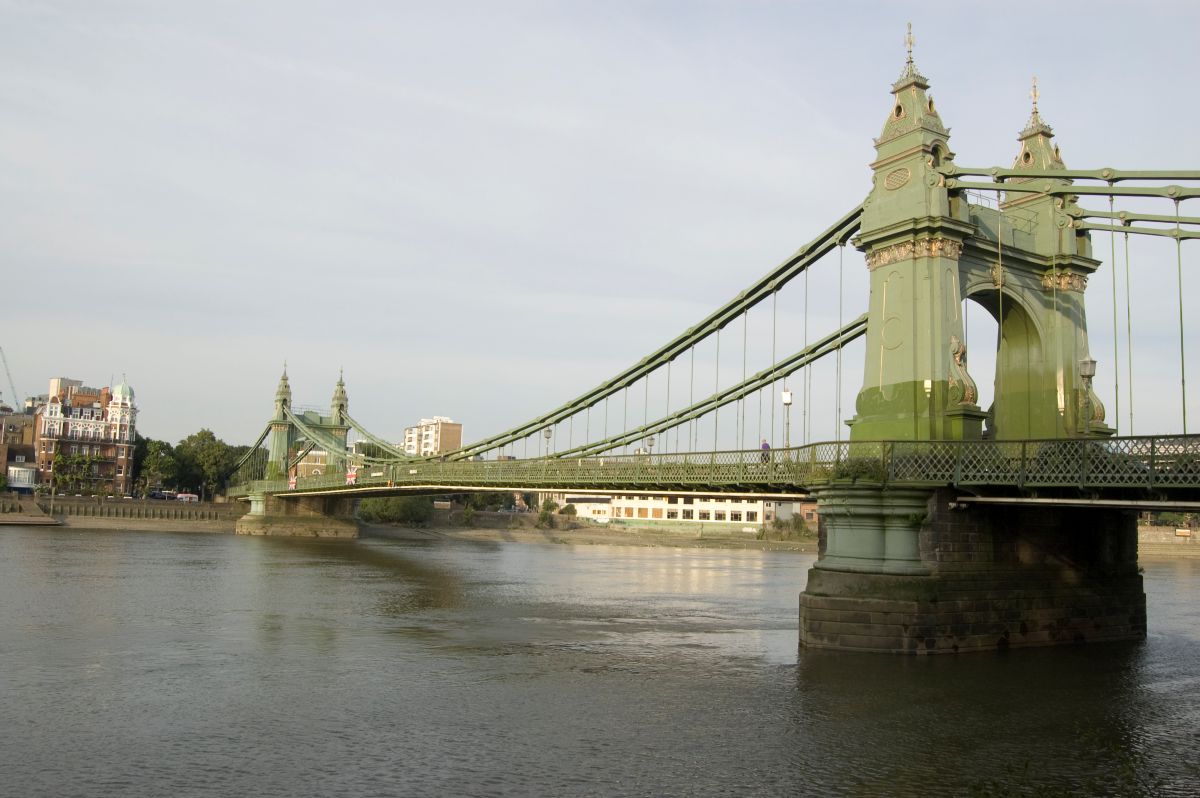
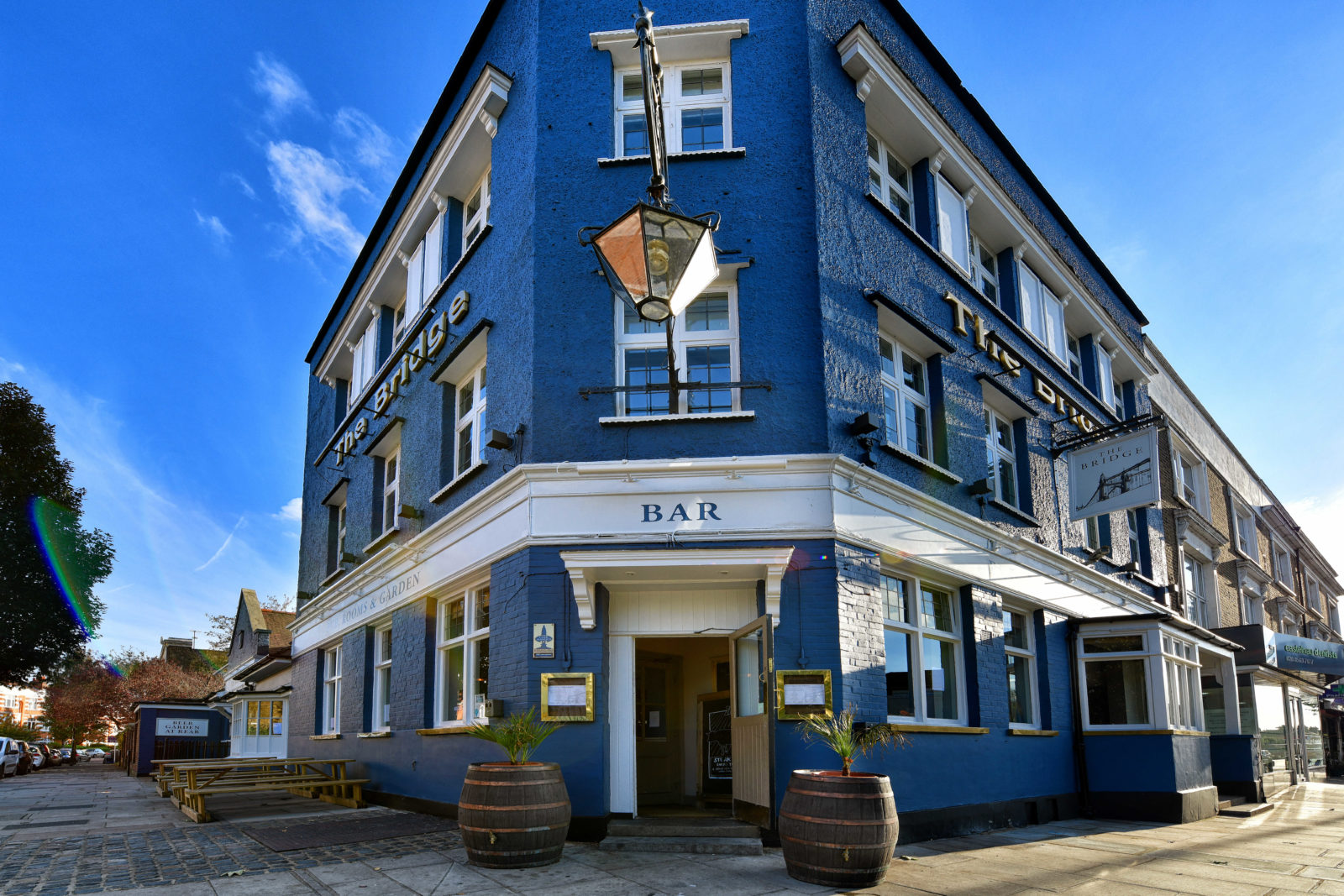
Hammersmith Bridge connects Hammersmith, on the left bank, with Barnes on the right. The bridge is one of the most graceful on the river and is closed to motorised traffic. You will stay at The Bridge at Barnes, a lovely neighbourhood pub with rooms.
Day 16 Hammersmith Bridge to Tower Bridge 11.4 miles
You continue to have the choice of left and right bank throughout the day. We would recommend you start on the left, walking through Bishop’s Park and past Fulham Palace, once the residence of the Bishop of London. Admire the Plan trees that line the riverbank.
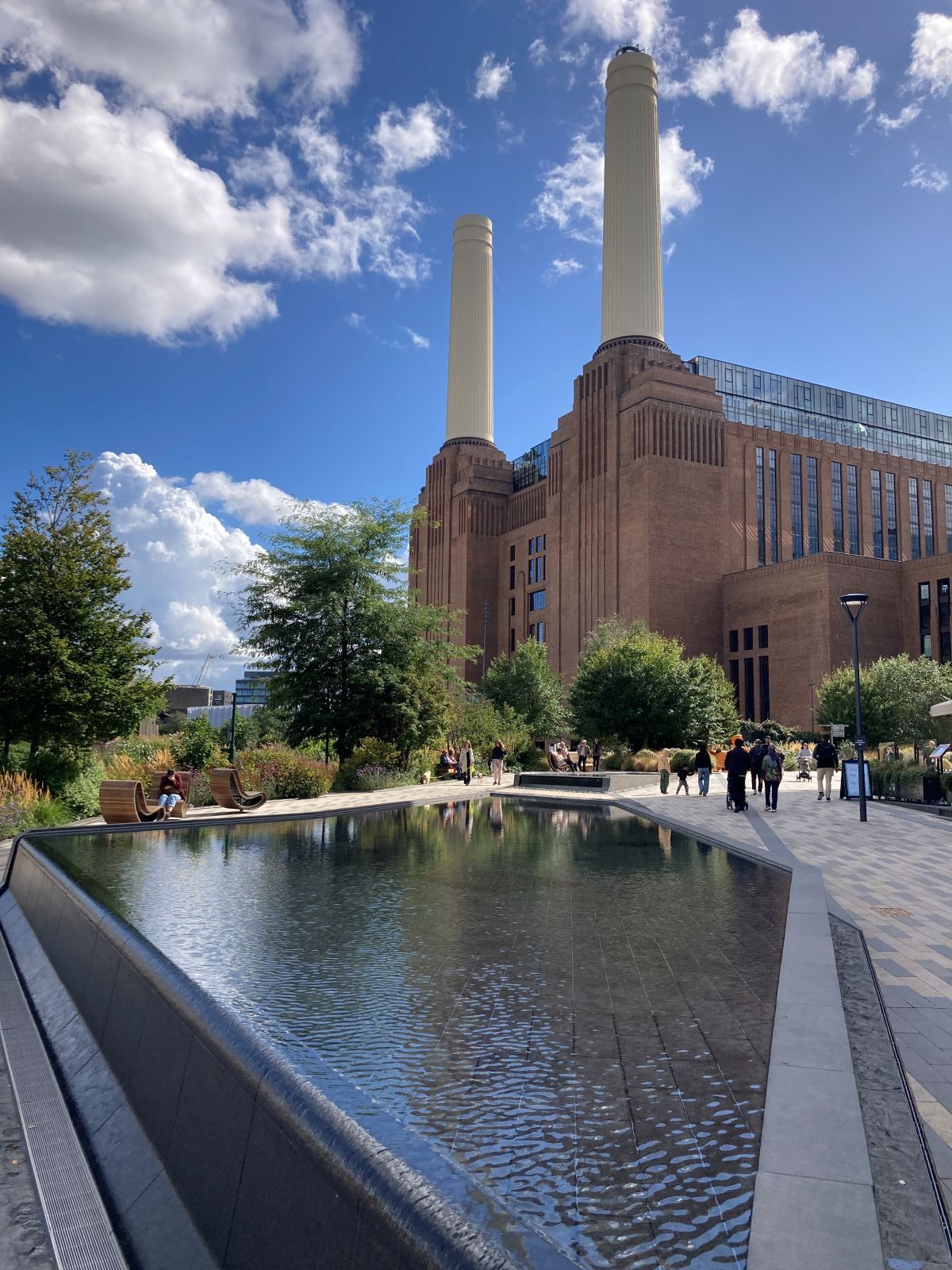
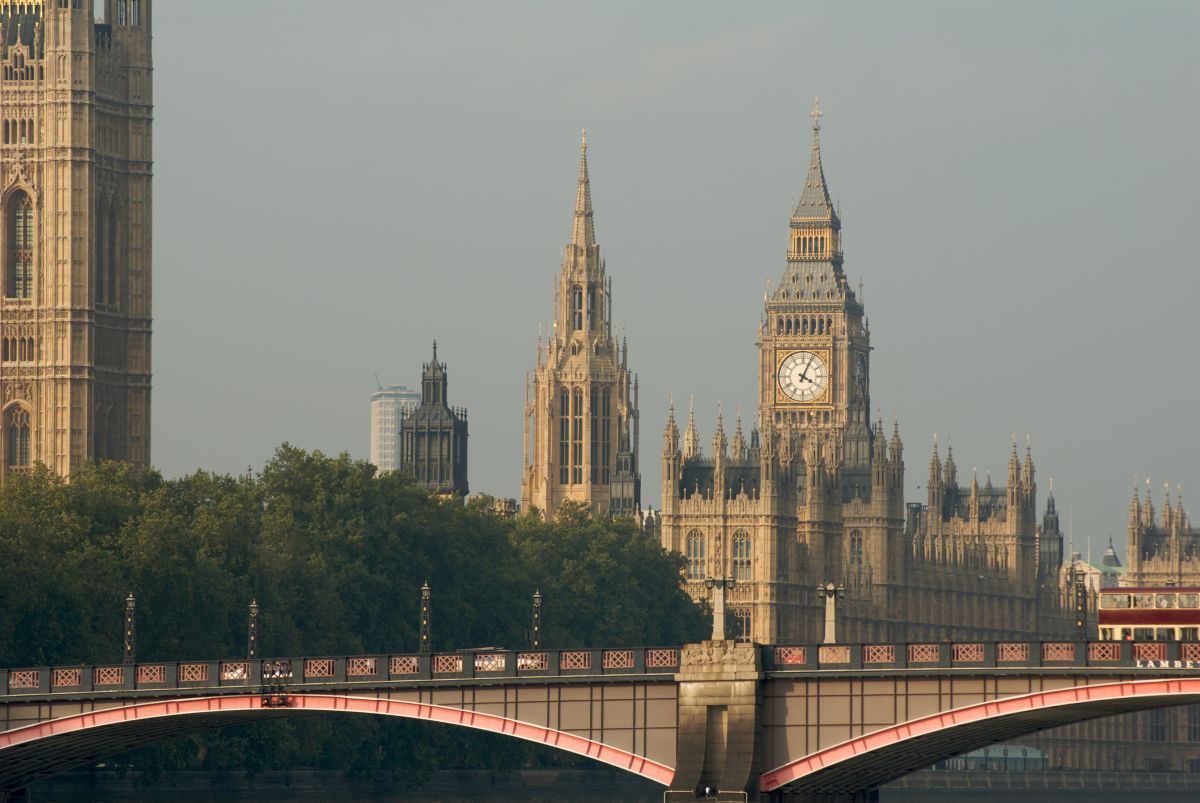
Cross the river at Putney Bridge and you will soon be at Battersea Park with its famous Pagoda. The Path passes in front of the revitalised Battersea Power station. On you go and you will soon see the Houses of Parliament gleaming in the sunshine across the river as you pass the moving Covid Memorial Wall.
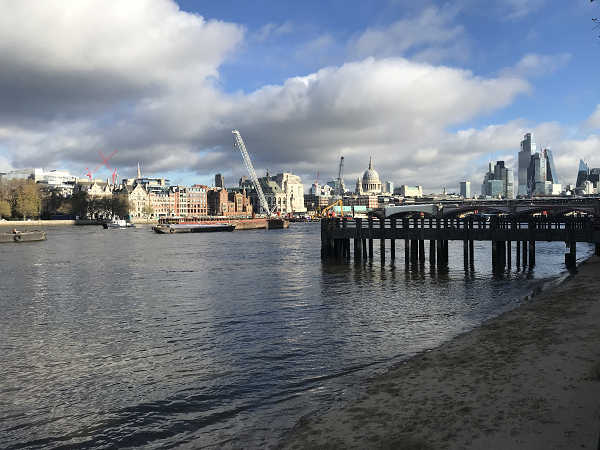
For the next three miles, not only will you have glorious views of the Houses of Parliament, St Paul’s Cathedral and The Tower of London, but you will pass directly by the Tate Modern, the Globe Theatre, the Golden Hinde, and HMS Belfast. Hopefully you will have time to experience one or more of these.
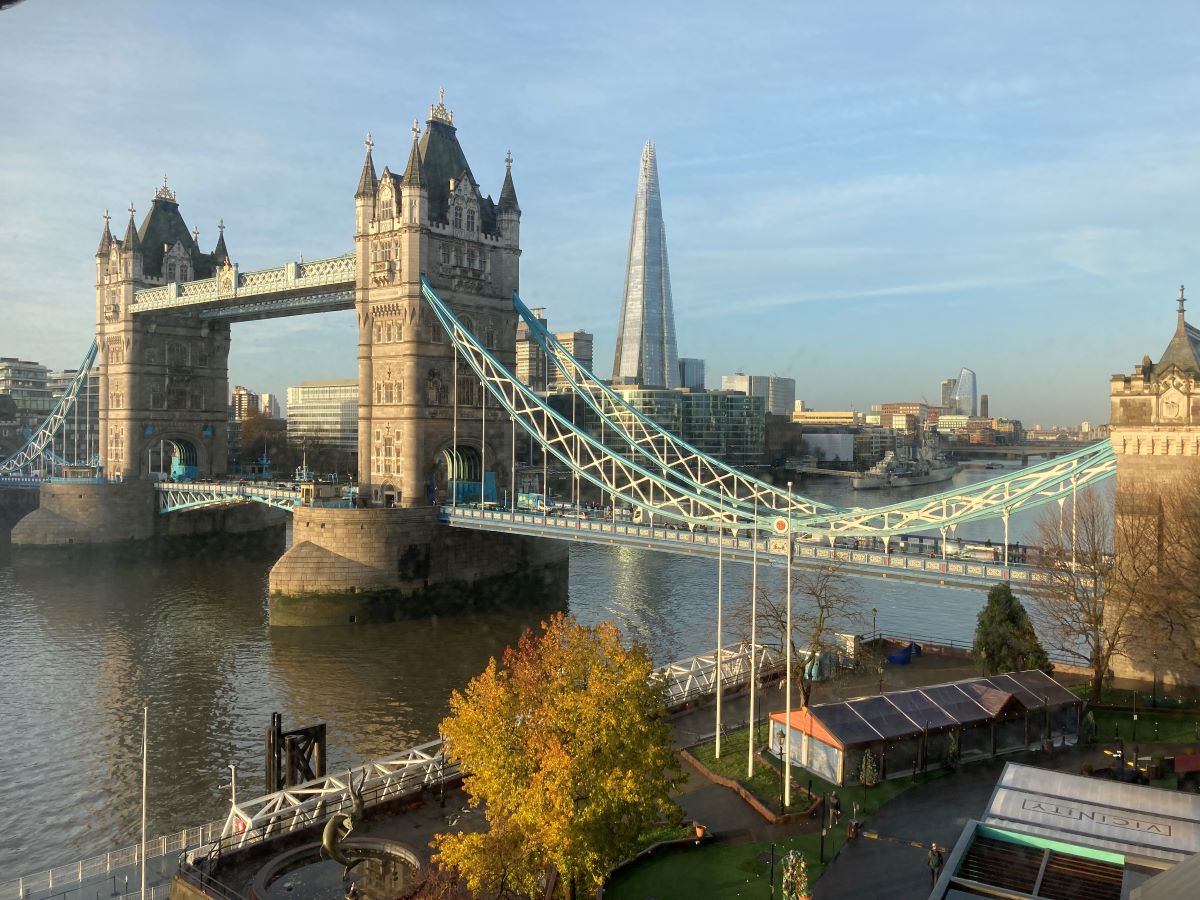
There’s a number of places we could have chosen to end this walk: Brunel’s statue at Paddington, the terminus of the Great Western Railway; or maybe Westminster. the historic seat of government. But we’ve opted for Tower Bridge. Aside from the sheer majesty of its bridge and castle, this is, historically, where ships from overseas would have unloaded their goods after sailing up the Thames Estuary.
You will stay at the Tower Hotel, on the river next to Tower Bridge. We will endeavour to secure you a room with a view. It’s perfectly placed for a visit to the Tower. Still a Royal Palace, it has been a base for kings and queens of England since the 11th century. A guided tour by one of the Yeomen is a memorable experience. So too is a view of the Crown Jewels.
Prices
Prices inclusive of bed and breakfast plus baggage transfer between hotels. A map and guide book is also included. You will have unlimited access to our local team in the event of difficulties.
Price per person assuming shared occupancy: £2,525
Price per person assuming single occupancy: £3,845
Rest days can be purchased but prices vary depending on category of hotel.